
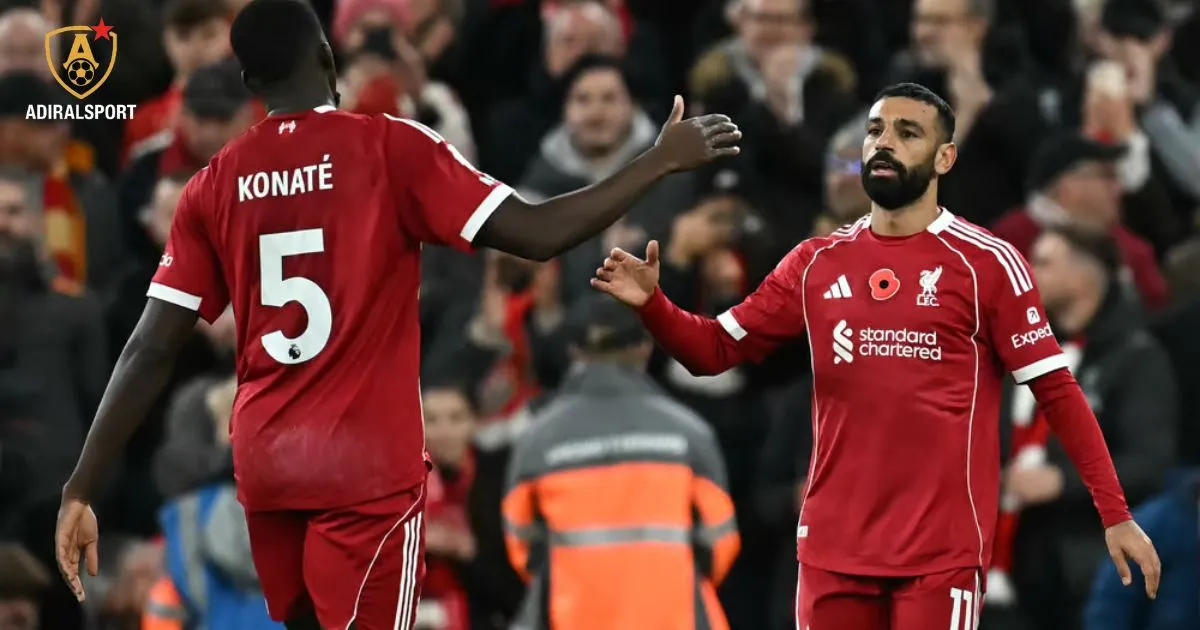
Liverpool vs Aston Villa Tactical Analysis
Table of Contents
It Wasn’t Just a Game, It Was a Reckoning
Let’s be honest. Before kick-off, you weren’t just nervous, were you? You were probably feeling that familiar, cold knot of dread in your stomach. Four straight losses. Four. For the reigning champions, that isn’t a blip; it’s a full-blown crisis. The pressure on Arne Slot was becoming suffocating. You could feel the doubt creeping in around Anfield, the whispers growing louder. And who was striding onto the pitch, brimming with confidence? Only Unai Emery’s Aston Villa, the Premier League’s most in-form team, riding high on a four-game winning streak. They didn’t just smell blood in the water; they were ready for a feast.
This match on November 1, 2025, wasn’t just another fixture in the 2025/2026 season. It was a psychological reckoning. It was the moment where you, the fans, and the team had to decide: Is this where the crisis deepens, or is this where we fight back? This Liverpool vs Aston Villa tactical analysis isn’t just a dry look at the 2-0 scoreline. It’s the story of that fight. We are going to break down the complex chess match, move by move, to show you exactly how Arne Slot outmaneuvered Unai Emery and pulled his team back from the brink. This is the Liverpool vs Aston Villa tactical analysis that explains how the champions finally found their answer.
Match Overview: The 2-0 Win at Anfield at a Glance
Before we plunge into the tactical deep end, you need the essential facts. This wasn’t a scrappy, lucky win; it was a controlled, professional, and desperately needed victory. Liverpool secured a 2-0 result that did more than just add three points; it lifted the oppressive weight of a crisis off the entire club. This was a statement.
Final Score & Match Timeline
If you missed the game, here is the story in its simplest form. The first half was a tense, nervous affair, with Liverpool probing and Villa looking to counter. The key moments tell you everything about the flow of the match.
- Venue: Anfield
- Final Score: Liverpool 2 – 0 Aston Villa
- Key Moments (Timeline):
- 43′ (Disallowed Goal): The moment your heart leaped into your throat. Hugo Ekitike, making a smart run, slotted the ball past Emi Martínez. You celebrated, only for the dreaded VAR lines to rule it out for a fractional offside. But this was more than a disallowed goal; it was a warning shot. It proved Villa’s high line could be beaten.
- 45+1′ (GOAL): The breakthrough. Just as you were settling for a tense 0-0 at the half, Mohamed Salah did what he does best. He timed his run to perfection, sprung the offside trap, and delivered a clinical finish. The roar from the Kop wasn’t just celebration; it was a visceral, collective exhale of pure relief.
- 58′ (GOAL): The cushion. Ryan Gravenberch, who was immense all game, sealed the deal. He made a surging, intelligent run from midfield, was found brilliantly by Alexis Mac Allister, and finished with the confidence of a top striker. 2-0. Game, set, and match.
Official Lineups & Formations (4-2-3-1 vs 4-2-3-1)
On paper, this looked like a mirror match. Both Slot and Emery set up in a 4-2-3-1 formation. But as you know, formations are just numbers on a tactics board. It’s the instructions given to the players that define the game. This Liverpool vs Aston Villa tactical analysis starts with seeing who was tasked with what.
| Liverpool (4-2-3-1) | Aston Villa (4-2-3-1) |
| GK: G. Mamardashvili | GK: E. Martínez |
| RB: T. Alexander-Arnold | RB: M. Cash |
| CB: V. van Dijk (C) | CB: E. Konsa |
| CB: I. Konaté | CB: P. Torres |
| LB: A. Robertson | LB: L. Digne |
| CM: A. Mac Allister | CM: B. Kamara |
| CM: R. Gravenberch | CM: A. Onana |
| RW: M. Salah | RW: M. Rogers |
| CAM: D. Szoboszlai | CAM: J. McGinn (C) |
| LW: L. Díaz | LW: E. Guessand |
| ST: H. Ekitike | ST: O. Watkins |
| Manager: Arne Slot | Manager: Unai Emery |
Looking at those teams, you can immediately see the battlegrounds. It was Gravenberch and Mac Allister against Kamara and Onana in the middle. It was Liverpool’s fluid front four against Villa’s notoriously aggressive high line. This was never going to be a boring stalemate; it was a tactical collision waiting to happen.
Full-Time Match Statistics
Now, let’s look at the numbers. If you just saw the 2-0 score, you might think it was an even game. But the stats below paint a very different picture. They show a story of total control and defensive suffocation. This data is the bedrock of our Liverpool vs Aston Villa tactical analysis.
| Statistic | Liverpool | Aston Villa |
| Possession % | 58% | 42% |
| Total Shots | 17 | 9 |
| Shots on Target | 8 | 2 |
| Corners | 7 | 4 |
| Fouls | 11 | 14 |
| Yellow Cards | 2 | 3 |
| Offsides | 4 | 5 |
What do these numbers really tell you?
- Possession (58% vs 42%): This wasn’t sterile, sideways passing. This was possession with a purpose. Liverpool dictated the tempo, forcing Villa to chase.
- Shots (17 vs 9): Liverpool created almost double the chances. This shows a clear offensive superiority.
- Shots on Target (8 vs 2): This is the most telling stat of the match. Eight shots on target for Liverpool shows clinical, quality chance creation. Only two for Villa, the league’s in-form attacking side, is a testament to a monumental defensive performance. This Liverpool vs Aston Villa tactical analysis must praise that defensive wall.
The Tactical Battlefield: A Deep-Dive Liverpool vs Aston Villa Tactical Analysis
This is where the game was truly won and lost. You saw the lineups, you saw the stats. Now, let’s connect the dots. How did Slot’s 4-2-3-1 so completely nullify Emery’s identical system? It came down to three core tactical victories for Liverpool.
Liverpool’s Crisis Averted: Slot’s Masterplan in Action
After four straight defeats, you’d be forgiven for thinking Arne Slot was out of ideas. You’d be wrong. This was a tactical masterclass, a clear plan executed to perfection.
1. Exploiting the High Line: The “Trap the Trapper” Strategy
Your eyes weren’t deceiving you: Unai Emery’s high line is infamous. It’s a high-risk, high-reward system designed to suffocate opponents, compress the pitch, and catch forwards offside. You’ve seen it work time and time again. But today, Slot used it against him.
- The Problem: In previous weeks, Liverpool’s build-up was too slow, allowing teams to get set.
- Slot’s Solution: Speed and intelligent movement. Instead of trying to pass through the press, Liverpool were instructed to pass over it.
- In Practice: You saw it from the first minute. Ekitike, Salah, and Díaz weren’t just making straight-line runs. They were making curved runs, starting from deeper positions to time their acceleration perfectly. Ekitike’s 43rd-minute disallowed goal was the system working; he was just a fraction early. Salah’s goal wasn’t luck; it was the result of 45 minutes of patiently probing that high line until it finally, inevitably, snapped. This was the centerpiece of Slot’s Liverpool vs Aston Villa tactical analysis of his opponent.
2. Midfield Dominance: The Mac Allister-Gravenberch Engine
This is where the game was truly won. The Liverpool vs Aston Villa tactical analysis of this match must focus on the center of the park. Villa’s duo of Kamara and Onana are physical, destructive, and excellent at breaking up play. Slot’s answer was not to fight strength with strength, but with brains and legs.
- Alexis Mac Allister: You saw him as the “metronome.” He dropped deep, almost alongside the center-backs, to collect the ball. This did two things: it drew Villa’s CAM (McGinn) out of position, creating space behind him, and it gave Mac Allister time to be the “quarterback,” picking out those long, line-breaking passes to the runners. His assist for the second goal was a perfect example—he wasn’t rushed; he found space, looked up, and played a defense-splitting pass.
- Ryan Gravenberch: He was the “engine.” His role was the opposite. He was given the license to be a “box-surging” number 8. While Mac Allister dictated, Gravenberch attacked. He acted almost as a third forward, making late, untracked runs into the box. Villa’s midfield simply couldn’t handle him. His goal was the perfect reward for this tactical instruction: a midfielder arriving late to finish like a striker.
3. Defensive Solidity: The ‘No-Nonsense’ Return to Basics
Let’s talk about the clean sheet. After conceding 11 goals in the last 5 games, you were desperate for one. What you got was a brick wall.
- Handling Ollie Watkins: How do you stop one of the league’s most dangerous strikers? You deny him the one thing he craves: space to turn and run.
- The Van Dijk & Konaté Partnership: This was a tactical masterstroke. You watched them execute it perfectly. They refused to be drawn out. They didn’t dive in. They kept a tight, disciplined line just in front of Mamardashvili and forced Watkins to play with his back to goal. Watkins is lethal when running at you; he’s far less effective in a phone-box battle with two elite center-backs. By denying him the turn, they effectively cut off Villa’s main attacking artery. This part of the Liverpool vs Aston Villa tactical analysis shows how a simple instruction, executed with discipline, can neutralize a star player.
Villa’s Streak Ends: What Went Wrong for Emery’s 4-2-3-1?
It’s easy to praise the winner, but for a complete Liverpool vs Aston Villa tactical analysis, you must understand why the loser failed. Villa’s four-game win streak wasn’t a fluke; they are a very good side. But today, their system was exposed.
- The High Line Breaks: As we covered, Villa’s greatest strength became their greatest liability. When you live by the sword, you die by the sword. The high line only works if you have perfect pressure on the ball. Because Mac Allister was given so much time, he could lift his head and play the “killer” pass. The moment a team isn’t afraid to go long and has the runners to do it, Emery’s trap is in trouble. Salah’s goal just before halftime was a psychological dagger that shattered their confidence in the system.
- Creative Ineffectiveness and the Elliott-shaped Hole: You probably noticed Villa looked… blunt. The absence of Harvey Elliott (ineligible against his parent club) was a massive factor. He is the creative link, the player who drifts between the lines and connects the midfield to Watkins. Without him, Rogers and McGinn looked flat. They couldn’t find those dangerous half-spaces, and their final ball was consistently poor. This forced Watkins to drop deeper to get involved, pulling him away from the areas where he is most dangerous.
- Losing the Second Ball Battle: This is a classic hallmark of a Slot team (and a Klopp team before him). Every time Villa cleared the ball, it felt like a red shirt was there to win it back. Liverpool’s midfield, led by the relentless Gravenberch, swarmed Villa. This meant Villa could never build sustained pressure. They’d clear their lines, and 10 seconds later, the ball was right back at their defense. It’s physically and mentally exhausting, and by the 60-minute mark, you could see Villa’s legs and resolve begin to fade.
A Tactical Analysis of Key Moments: How the Goals Were Scored
A true Liverpool vs Aston Villa tactical analysis must go beyond that a goal was scored and explain how. These goals weren’t accidents. They were the end product of everything we just discussed.
Goal 1: Mohamed Salah (45+1′)
Let’s set the scene. It’s first-half stoppage time. You’re probably already thinking about the halftime talk. Anfield is tense.
- The Buildup: The move starts deep. It’s a long, searching ball played from Liverpool’s half (let’s say from Alexander-Arnold, who saw the opening). This wasn’t a hopeful punt; it was a deliberate, drilled pass into the space behind Villa’s backline.
- The Tactical Breakdown: This goal is 100% about beating the offside trap. You’ve seen Salah get caught by it before. But here, his timing is exquisite. He is not level with the last defender when the ball is kicked. He starts his run from a “jockeying” position, exploding onto the pass just as it’s played. Pau Torres and Ezri Konsa, in their rigid high line, step up, but it’s too late. The ball is in behind them.
- The Finish: This is where you see Salah’s composure. He’s one-on-one with Martínez, one of the world’s best in that situation. He doesn’t panic. He doesn’t blast it. He opens his body and coolly slots it into the corner. It was a goal born from a direct tactical instruction: run in behind the high line.
Goal 2: Ryan Gravenberch (58′)
This goal was the one that let you finally relax. It was a “system” goal, and it was beautiful.
- The Buildup: The play is in Villa’s half. Liverpool are recycling possession. Alexis Mac Allister finds a pocket of space between Villa’s midfield and defensive lines. This space exists because Villa’s midfield (Kamara/Onana) are so focused on Liverpool’s front four.
- The Tactical Breakdown: This is the midfield rotation we talked about. As Mac Allister gets his head up, you can see Ryan Gravenberch begin his run. He is not marked. Why? Because as a central midfielder, his “natural” opponent is Onana or Kamara, but they are occupied. He is surging from deep, an untracked runner. Villa’s defence is already stretched, watching Díaz, Salah, and Ekitike. They don’t see him until it’s too late.
- The Assist & Finish: Mac Allister’s pass is perfect—weighted, precise, and into Gravenberch’s path. The finish is clinical, struck low and hard. This goal is the perfect exclamation point on Slot’s midfield plan. It wasn’t about a striker’s magic; it was about a midfielder executing his advanced role to perfection. This moment is a key takeaway in any Liverpool vs Aston Villa tactical analysis of the match.
Player Performance Analysis and Tactical Roles
You can’t have a Liverpool vs Aston Villa tactical analysis without looking at the individuals who made the system work.
Man of the Match: Ryan Gravenberch (Liverpool)
- Why You Noticed Him: You couldn’t miss him. His energy was infectious. From the first minute, he was everywhere.
- His Tactical Role: He was the “box-to-box-and-beyond” midfielder. He broke up Villa’s play, he drove the ball forward to transition from defense to attack, and he had the attacking instincts to arrive in the box and score the game-sealing goal. This was the complete midfield performance you’ve been waiting for from him. He was the engine of the entire team.
Tactical Standouts
- Alexis Mac Allister (Liverpool): If Gravenberch was the engine, Mac Allister was the steering wheel. You watched him dictate the entire flow of the game. His assist was sublime, but his real work was in his positioning—always available for a pass, always calm under pressure. He was the antidote to Villa’s press.
- Virgil van Dijk (Liverpool): A true captain’s performance. After weeks of criticism aimed at the whole defence, you saw him take charge. He was aerially dominant, his positioning against Watkins was flawless, and he organized the backline to secure that vital clean sheet. This was Van Dijk back to his imperious best.
- Hugo Ekitike (Liverpool): He may not have scored, but his role in this Liverpool vs Aston Villa tactical analysis is crucial. His constant, intelligent movement was what created the anxiety in Villa’s backline. His disallowed goal was the test run; Salah’s goal was the final product. He was the tireless “pest” who made the system work.
Tactical Disappointments
- Villa’s Attacking Midfielders (Rogers & McGinn): You kept waiting for them to get into the game, but they never did. They were tactically nullified. Trapped between Liverpool’s press-resistant midfield and solid backline, they couldn’t find any space to operate. They were anonymous, and as a result, so was Villa’s attack.
- Ollie Watkins (Aston Villa): It’s rare to see him so quiet, but this was a tactical silencing. He was completely isolated. You saw his frustration growing as he was forced to feed on scraps. Credit goes to Konaté and Van Dijk for a near-perfect defensive job. This wasn’t just an “off day” for Watkins; he was comprehensively beaten by Liverpool’s defensive game plan.
Conclusion: A Tactical Win That Changes the Narrative
So, what do you take away from this? In the end, this Liverpool vs Aston Villa tactical analysis reveals a 2-0 victory that was built on brains, not just passion. You witnessed Arne Slot, a manager under immense pressure, diagnose the exact weaknesses in his own team (defensive fragility, slow build-up) and the exact weaknesses in his opponent (the high line).
He prescribed the perfect antidote. By bravely targeting Emery’s high line, empowering his midfield pivot with distinct roles, and demanding a return to defensive discipline, Slot secured a win that was far more than just three points. It was a statement. It was a crisis averted.
For Aston Villa, this is a harsh bump in the road. You saw today how their high-risk, high-reward system can be clinically dismantled. The Liverpool vs Aston Villa tactical analysis of this match will serve as a blueprint for other managers. But for you and for Liverpool, this is a moment to breathe. The 2-0 scoreline doesn’t even do it justice. This was a tactical masterpiece, a return to form, and perhaps, the real start of Liverpool’s 2025/2026 season.
❓ Liverpool vs Aston Villa Tactical Analysis: FAQ
You’ve read the breakdown, but you might still have questions. Here are some quick answers to common queries about this match.
What was the key tactical factor in this Liverpool vs Aston Villa tactical analysis?
The single most important factor, as we’ve explored, was Liverpool’s strategy to exploit Aston Villa’s high offside trap. You saw it fail with Ekitike’s disallowed goal and then succeed spectacularly with Salah’s opener. This wasn’t a random long ball; it was a deliberate, coached plan from Arne Slot. By turning Villa’s biggest strength into their most critical weakness, Liverpool controlled the game’s narrative.
How did Arne Slot’s tactics change from previous losses?
This Liverpool vs Aston Villa tactical analysis showed you a manager who adapted. In recent losses, the team looked defensively open and slow in possession. Today, you saw two major changes:
- Defensive Compactness: The back four was disciplined and refused to be drawn out by Watkins.
- Purposeful Midfield: Instead of slow, sideways passing, the midfield pivot of Mac Allister (the creator) and Gravenberch (the engine) had clear, aggressive roles designed to break lines and support the attack.
Why couldn’t Unai Emery’s in-form Aston Villa score?
Our tactical analysis points to two clear reasons for Villa’s blank sheet. First, you witnessed a masterclass in defensive positioning from Van Dijk and Konaté, who completely isolated Ollie Watkins. Second, Villa severely missed the creative spark of the ineligible Harvey Elliott. Without him, their attacking midfielders (Rogers and McGinn) were ineffective, unable to find the space or the passes needed to unlock Liverpool’s defence.
Was this match the most important Liverpool vs Aston Villa tactical analysis of the season?
Given the context, it’s certainly one of them. For Liverpool, stopping a four-game losing streak against the league’s most in-form team was a massive psychological and tactical victory for Arne Slot. For Aston Villa, it exposed a major flaw in their system. This Liverpool vs Aston Villa tactical analysis will likely be studied by both managers for the reverse fixture.
A Final Thought: What Did You See?
You’ve read our deep-dive Liverpool vs Aston Villa tactical analysis, but football is a game of a million different perspectives.
What did you notice from the stands or watching at home? Did you spot a different tactical battle that decided the game? Did Ryan Gravenberch’s performance convince you?
Drop your own observations and tactical takeaways in the comments below! Let’s continue the conversation.