
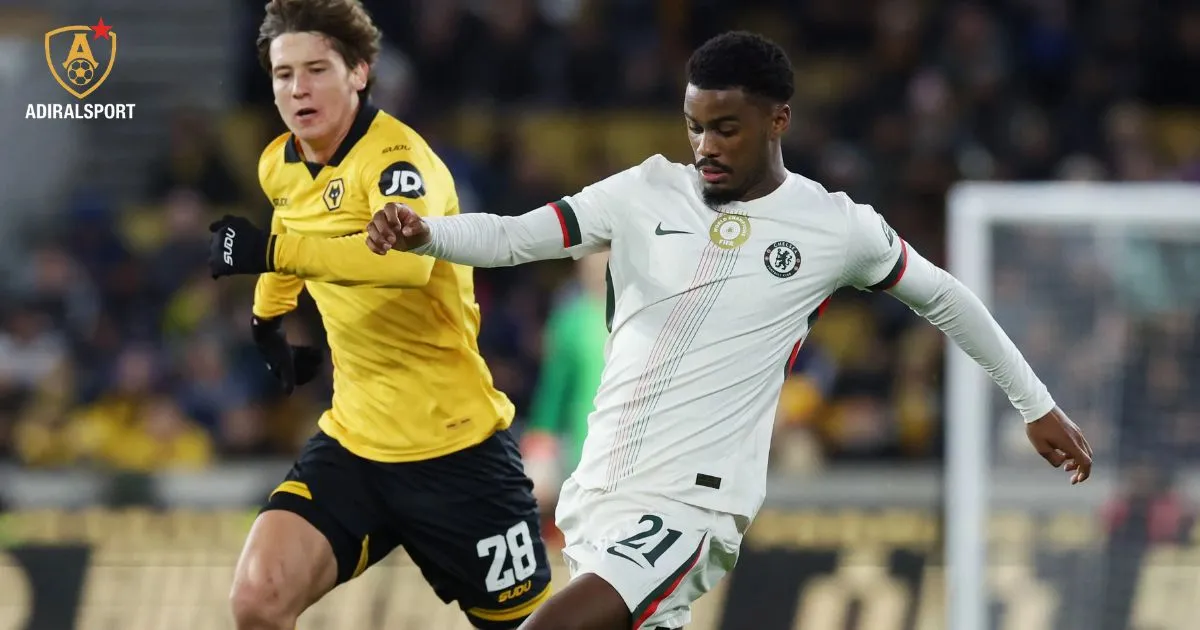
Chelsea vs Wolves Tactical Analysis
Table of Contents
Picture the scene. It’s a crisp autumn evening under the Molineux floodlights. You’ve settled in for what you expect to be a standard early-round cup tie, perhaps a showcase for some younger talent. What you get instead is ninety minutes of pure, unadulterated football chaos.
You witness a match that swings one way, then violently the other, leaving you breathless and questioning everything you thought you knew about control in a football match. The EFL Cup clash between Wolverhampton Wanderers and Chelsea on October 29, 2025, wasn’t just a game; it was a narrative of tactical dominance, bewildering collapse, and a heroic, if ultimately fruitless, comeback. This was a 4-3 thriller that served up more talking points than a month’s worth of Premier League action.
If you’re looking for a deep dive into the strategic chess match that unfolded, you’ve come to the right place. This is more than just a match report; this is a comprehensive Chelsea vs Wolves tactical analysis. We’re going to peel back the layers of this seven-goal spectacle, exploring the formations, the managerial mind games, and the individual moments of brilliance and despair that defined the evening.
You’ll understand exactly how Chelsea raced into what seemed an unassailable three-goal lead and why that comfortable cushion turned into a desperate fight for survival. This definitive Chelsea vs Wolves tactical analysis will leave you with a richer appreciation for the beautiful game’s strategic depth.
A Game of Two Halves: A Rollercoaster of Emotions You Couldn’t Script
Have you ever felt that pure elation as a fan, watching your team execute a game plan to perfection? For the travelling Chelsea supporters, the first half was precisely that. It was a symphony of movement, pressing, and clinical finishing. You could see Enzo Maresca’s philosophy unfolding in real-time, a dynamic and aggressive approach that a heavily-rotated Wolves side simply couldn’t handle. Every pass had a purpose, every run was intelligent, and the three-goal lead at the break felt like a fair reflection of the chasm between the two sides. You were likely thinking about the next round, already mentally booking your place.
But then, football does what it does best. It reminds you that it is, at its heart, an emotional and unpredictable beast. The second half was a completely different story. It was a testament to the spirit Vítor Pereira has tried to instill in his Wolves team. You could feel the shift in momentum from your seat. The fear that crept into the Chelsea players was palpable as Wolves, roared on by a suddenly revitalized home crowd, threw caution to the wind. The comfortable lead evaporated into a nail-biting, one-goal advantage.
That journey from serene confidence to heart-pounding anxiety is what makes cup football so special, and it was the central theme of this incredible match. This detailed Chelsea vs Wolves tactical analysis will explore both ends of that emotional spectrum.
Match Overview
To truly appreciate the tactical nuances, you need the basic facts laid out. Here’s a snapshot of the memorable encounter that provides the foundation for our analysis.
| Competition | Date | Venue | Final Score |
| EFL Cup | 29/10/2025 | Molineux Stadium | Wolves 3 – 4 Chelsea |
The Starting Lineups: A Look at the Teamsheets / Chelsea vs Wolves Tactical Analysis
Every tactical battle begins with the selection of the soldiers. Both managers, with one eye on a grueling Premier League schedule, shuffled their packs significantly. This wasn’t the full-strength Premier League encounter you might be used to; it was a glimpse into the depth of both squads. Understanding these rotations is fundamental to any credible Chelsea vs Wolves tactical analysis, as the unfamiliarity and inexperience on the pitch played a huge role in the chaotic nature of the game.
Chelsea’s Rotated XI: Maresca’s Youthful Gamble
Enzo Maresca put his faith in the future. You could see a clear strategy to rest key stars and give valuable minutes to those on the fringes. This approach is a double-edged sword; it builds experience but can sacrifice cohesion.
In goal, Filip Jorgensen was given the nod. The back four had a blend of youthful energy and some experience, featuring Malo Gusto at right-back, a central pairing of the towering Tosin Adarabioyo and the highly-rated prospect Josh Acheampong, with another youngster, Jorrel Hato, on the left. This defensive line, on paper, had pace and technical ability but lacked the hardened experience of playing together under intense pressure—a fact that would become painfully apparent.
The midfield engine room was entrusted to Roméo Lavia and Andrey Santos. Your eyes were likely drawn to this pairing, a duo with immense potential tasked with controlling the tempo. They were the shield and the springboard. Ahead of them, the attacking talent was truly exciting. You had the Brazilian prodigy Estevao on one flank, the dynamic Jamie Gittens on the other, and the creative Facundo Buonanotte in the number ten role. Leading the line was Tyrique George, a young forward eager to impress.
- Formation: 4-2-3-1. A system familiar to Maresca’s philosophy, emphasizing control in the middle and fluid movement from the attacking midfielders. You can see how this shape allows for a high press, with the front four able to apply coordinated pressure.
- Key Players: Your focus would naturally be on Jamie Gittens, whose direct running caused havoc, Andrey Santos, who dictated play from deep, and the skillful Estevao, who provided the moments of magic. This Chelsea vs Wolves tactical analysis will show how they were instrumental in the first-half demolition.
Wolves’ Wholesale Changes: Pereira’s Premier League Priority
Vítor Pereira’s team sheet sent a clear message: survival in the Premier League was the absolute priority. He made a remarkable eleven changes from his last league outing, essentially fielding a completely new side. For you, the spectator, this signaled either a lack of interest in the cup or a desperate need to find a winning formula amongst his squad players.
José Sá, usually the number one, retained his place in goal, perhaps to provide a semblance of stability. The defense, however, was entirely new. Matt Doherty and Toti Gomes were the most recognizable names in a backline that was set up for a tough evening. The midfield and attack were a mix of fringe players and youngsters, with the experienced Hwang Hee-chan being a notable inclusion, tasked with providing leadership and a cutting edge. The powerful Tolu Arokodare was chosen to lead the line, his physical presence a clear tactical ploy. David Moller Wolfe provided width and energy from a deeper role.
- Formation: 4-1-4-1. A solid, if unspectacular, formation. You can see the logic: a single holding midfielder to protect the back four, with a flat line of four ahead to provide both defensive cover and support for the lone striker. It’s a system designed to be compact and difficult to break down.
- Key Players: You would have identified Hwang Hee-chan as the main threat, given his Premier League experience. The aerial prowess of Tolu Arokodare was always going to be a key outlet, and the engine of David Moller Wolfe would prove to be vital. This particular Chelsea vs Wolves tactical analysis will demonstrate how they became central figures in the second-half fightback.
Chelsea’s First-Half Dominance: A Tactical Masterclass Unfolds Before Your Eyes / Chelsea vs Wolves Tactical Analysis
The first 45 minutes were a perfect illustration of what “Maresca-ball” can look like when it clicks. If you were watching, you saw a Chelsea side that was tactically superior in every department. They were sharper, quicker, and more intelligent in their play. They didn’t just outplay Wolves; they completely overwhelmed them. This wasn’t just a team playing well; it was a system functioning at its peak. This section of our Chelsea vs Wolves tactical analysis breaks down the two key components of that early dominance.
The High Press: Suffocating Wolves at the Source
Modern football is often defined by what you do without the ball, and Chelsea’s out-of-possession work in the first half was exceptional. You witnessed a coordinated, aggressive high press that started from the very front. Tyrique George, as the lone striker, didn’t just wait for service; he was the first line of defense, harrying Wolves’ central defenders and cutting off passing lanes.
He wasn’t alone. The trio of Gittens, Buonanotte, and Estevao were the support act, closing down the full-backs and central midfielders with relentless energy. You could see the panic in the eyes of the Wolves players. They had no time on the ball, no easy passing options. Every attempt to play out from the back was met with a swarm of blue shirts.
This wasn’t just mindless running; it was intelligent, triggered pressing. As soon as a Wolves player received the ball with his back to goal or took a poor touch, it was the signal to engage. The result? Forced errors, turnovers in dangerous areas, and complete control of the game’s territory. The first and third Chelsea goals were direct products of this strategy. For the opener, you saw Andrey Santos pounce on a loose pass on the edge of the Wolves box before finishing coolly.
For the third, it was a turnover forced by the press that allowed Estevao the time and space to execute his sublime chip. This was a tactical masterclass in proactive defending, a key highlight in any Chelsea vs Wolves tactical analysis.
Swift Transitions and Attacking Fluidity
Winning the ball high up the pitch is one thing; punishing the opposition is another. Chelsea’s ability to transition from defense to attack in the blink of an eye was simply breathtaking. The moment possession was secured, your attention was immediately drawn to the forward runners.
The system was designed for this. With Lavia and Santos providing a secure base, the attacking four had the freedom to interchange positions and make penetrating runs. Jamie Gittens was the primary outlet. His blistering pace and direct dribbling down the left flank were a constant nightmare for Matt Doherty. You watched him time and time again receive the ball and immediately drive at his man, creating chaos and stretching the Wolves’ defensive shape.
The second goal was the perfect embodiment of this attacking philosophy. You saw Gittens burst down the wing, leaving his marker for dead, before delivering a precise cross that Tyrique George couldn’t miss. It was a goal born of speed, precision, and clinical execution. But it wasn’t just about pace. The movement of Estevao and Buonanotte between the lines was equally important.
They drifted into pockets of space, making them impossible to mark and linking the midfield to the attack with clever passes and touches. This attacking fluidity, a crucial part of this Chelsea vs Wolves tactical analysis, made Chelsea look irresistible.
Wolves’ Second-Half Resurgence: A Shift in Momentum You Could Feel / Chelsea vs Wolves Tactical Analysis
If the first half was a tactical lecture from Chelsea, the second was a lesson in heart, desire, and raw intensity from Wolves. The team that emerged from the dressing room after the break was almost unrecognizable. Vítor Pereira had clearly lit a fire under his players, and a tactical shift accompanied their newfound aggression. You could sense the tide turning with every tackle, every fifty-fifty won by a player in gold. Our Chelsea vs Wolves tactical analysis now examines how the home side almost pulled off one of the great cup comebacks.
Increased Intensity and a More Direct Approach
The most noticeable change was the sheer intensity. Wolves started flying into challenges, closing down Chelsea with the same ferocity the Blues had shown in the first half. They played with a sense of injustice, a point to prove. You saw them get in the faces of Chelsea’s young players, letting them know they were in for a physical battle.
Tactically, the patient build-up play was abandoned. You witnessed a far more direct approach. The ball was moved forward quickly, often bypassing the midfield entirely. Long balls were aimed towards the physical presence of Tolu Arokodare, who began to bully Chelsea’s young central defenders. Suddenly, Adarabioyo and Acheampong were forced into a different kind of game—an aerial and physical duel they weren’t entirely comfortable with.
This direct style also meant Wolves could get the ball into wide areas faster, utilizing the energy of their full-backs and wingers. Every set-piece, every long throw-in became a moment of genuine threat. It might not have been as aesthetically pleasing as Chelsea’s first-half display, but it was brutally effective. It unsettled Chelsea, disrupted their rhythm, and dragged the game into a chaotic scrap—territory where Wolves felt far more at home. This shift is a pivotal focus for this Chelsea vs Wolves tactical analysis.
Exploiting Chelsea’s Defensive Frailties
As the pressure mounted, the composure Chelsea had shown in the first half evaporated. You could see the inexperience in their backline begin to tell. The first Wolves goal, scored by Arokodare just after halftime, was the catalyst. It planted a seed of doubt. The second goal exposed a clear weakness. A simple long throw-in caused chaos in the Chelsea box, and David Moller Wolfe was on hand to smash the ball home. You watched as what was once a calm and collected defense started to “panic,” as Maresca himself would later admit.
Passes became hurried, clearances were sliced, and the defensive line dropped deeper and deeper, inviting more pressure. The introduction of senior players like Enzo Fernández and Marc Cucurella was a clear attempt by Maresca to restore some semblance of order and experience. You saw him trying to plug the holes in a sinking ship. However, the momentum was a powerful force. Wolves had smelled blood, and they relentlessly targeted what they now knew was a fragile and rattled Chelsea defense.
The near-collapse demonstrated a key learning point for Maresca’s side and is an essential part of any honest Chelsea vs Wolves tactical analysis. The resilience of the team was tested to its absolute limit.
Match Timeline and Key Moments / Chelsea vs Wolves Tactical Analysis
To fully grasp the narrative of this back-and-forth contest, you need to see the sequence of events. This timeline charts the dramatic swings in a match that was never dull for a single moment. Following this timeline is crucial for a complete Chelsea vs Wolves tactical analysis.
| Time | Event | Details |
| 5′ | Goal Chelsea (0-1) | A high press forces a defensive error, and Andrey Santos calmly slots the ball home. A perfect start for the visitors, born from their tactical game plan. |
| 15′ | Goal Chelsea (0-2) | Jamie Gittens bursts down the left wing and delivers a pinpoint cross for Tyrique George to tap in. A goal showcasing Chelsea’s devastating transition play. |
| 41′ | Goal Chelsea (0-3) | Estevao, after another turnover, produces a moment of magic with an audacious and perfectly executed chip over the Wolves goalkeeper. It looked like game over. |
| 48′ | Goal Wolves (1-3) | Tolu Arokodare gets one back for the hosts almost immediately after the restart, giving Molineux a glimmer of hope and sparking the comeback. |
| 73′ | Goal Wolves (2-3) | The pressure tells. Following a long throw-in, the ball falls to David Moller Wolfe, who makes no mistake. The comeback was well and truly on. |
| 86′ | Red Card Chelsea | The substitute Liam Delap is shown a second yellow card for a late challenge. Chelsea are now down to ten men and hanging on for dear life. |
| 89′ | Goal Chelsea (2-4) | Out of nowhere, Jamie Gittens unleashes a stunning long-range strike that flies into the top corner. A moment of individual brilliance that seemed to have won it. |
| 90+1′ | Goal Wolves (3-4) | The drama wasn’t over. David Moller Wolfe scores his second of the night in stoppage time to set up an incredibly tense final few minutes. |
Statistical Deep Dive: The Numbers Behind the Narrative / Chelsea vs Wolves Tactical Analysis
Statistics don’t always tell the whole story, but in this case, they provide fascinating context for our Chelsea vs Wolves tactical analysis. You can see the evidence of Chelsea’s possession-based game and how Wolves made their chances count despite seeing less of the ball.
| Statistic | Wolves | Chelsea |
| Possession | 40% | 60% |
| Total Shots | 15 | 11 |
| Shots on Target | 4 | 4 |
| Expected Goals (xG) | 1.23 | 2.41 |
| Fouls Committed | 13 | 12 |
| Yellow Cards | 3 | 5 |
| Red Cards | 0 | 1 |
Data sourced from multiple reports.
What do these numbers tell you? Chelsea’s 60% possession confirms their control, especially in the first half. However, Wolves having more total shots (15 to 11) backs up the narrative of their second-half siege. The most telling statistic is perhaps the Expected Goals (xG). Chelsea’s xG of 2.41 suggests they created higher quality chances throughout the match, justifying their four goals.
Wolves’ xG of 1.23, compared to their three goals, indicates some clinical finishing and perhaps a degree of fortune. The high card count, including the red for Chelsea, paints a picture of the feisty, competitive nature of the second half. This statistical Chelsea vs Wolves tactical analysis adds a crucial layer of objective data to the subjective drama we all witnessed.
Conclusion: A Valuable Learning Curve for Both Sides / Chelsea vs Wolves Tactical Analysis
So, what do you take away from a match like this? For Chelsea, it was a tale of two halves that serves as a vital, if nervy, learning experience. Enzo Maresca saw both the dazzling potential of his tactical system and the glaring vulnerabilities of his young squad. You can be sure he was delighted with the attacking football of the first half, a clear vindication of his methods.
That part of this Chelsea vs Wolves tactical analysis is overwhelmingly positive. However, the second-half performance was a stark warning. The lack of game management, the inability to withstand physical pressure, and the individual errors will give him plenty to work on at the Cobham training ground. They survived, but it was a lesson in the importance of resilience and experience.
For Wolves and Vítor Pereira, while the result was a defeat, the performance offered a significant silver lining. In a season struggling for momentum, the character and fight your team showed in that second half is something you can build on. The Molineux crowd, which was flat and frustrated at halftime, was roaring with pride by the final whistle. They saw a team that was willing to fight for the badge.
This Chelsea vs Wolves tactical analysis shows that Pereira found a tactical approach—more direct, more aggressive—that clearly unsettled a top side. The challenge for you, if you’re a Wolves fan, is to see that intensity transferred to your crucial Premier League campaign. It was a night of high drama, a fantastic cup tie, and a rich source of tactical intrigue for followers of both clubs. This memorable game will be referenced in many a future Chelsea vs Wolves tactical analysis.
FAQ: Answering Your Questions on the Chelsea vs Wolves Tactical Analysis
What was the final score of the Chelsea vs Wolves EFL Cup match?
The final score was Wolves 3-4 Chelsea. It was a thrilling contest from start to finish, providing a wealth of information for this detailed Chelsea vs Wolves tactical analysis.
Who were the goalscorers in the Chelsea vs Wolves match?
For Chelsea, the goals came from a variety of sources: Andrey Santos, Tyrique George, Estevao, and a stunning late winner from Jamie Gittens. For Wolves, the powerful Tolu Arokodare scored one, and the energetic David Moller Wolfe bagged a brace in the second half.
What were the key tactical takeaways from this Chelsea vs Wolves tactical analysis?
The most crucial takeaways from this Chelsea vs Wolves tactical analysis are twofold. Firstly, Chelsea’s high-pressing, fast-transitioning 4-2-3-1 system can be devastatingly effective when executed correctly, as seen in the first half. Secondly, a more direct, aggressive, and physical approach can effectively disrupt a technical, possession-based team, as Wolves demonstrated in their remarkable second-half comeback.
How did the managers’ tactical changes influence the game?
The managers’ decisions were central to the game’s narrative. Enzo Maresca’s initial game plan and selection gave Chelsea the perfect platform for their first-half dominance. His later substitutions were reactive, aimed at managing the crisis as Wolves fought back. Conversely, Vítor Pereira’s halftime adjustments were transformative. His decision to instruct his team to play with higher intensity and a more direct style completely changed the flow of the game and was the primary reason this became such a competitive fixture, a key point in our Chelsea vs Wolves tactical analysis.