
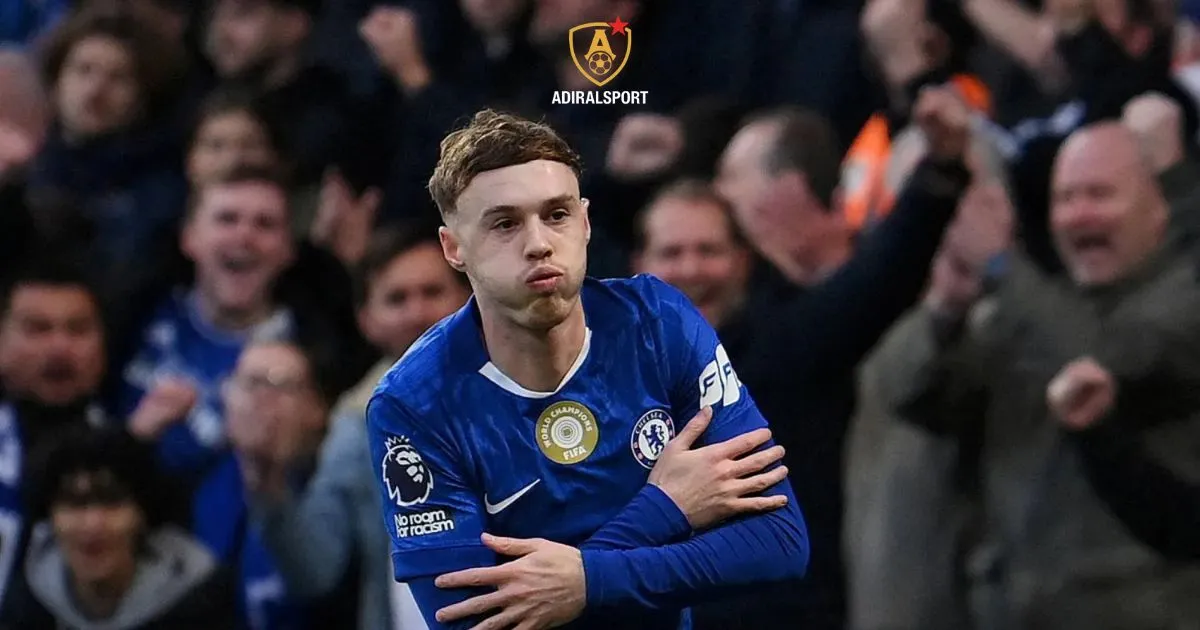
Chelsea VS Everton Tactical Analysis
Table of Contents
Opening: The Relief of the Blue Faithful
You know that specific sound at Stamford Bridge? It isn’t the roar of a goal, nor the chant of a name. It is the collective exhale of forty thousand souls when order is finally restored. For weeks, you have felt the air in West London grow thick with tension. A winless streak has hung over Enzo Maresca’s project like a stubborn storm cloud, casting shadows of doubt over everything you hoped this season would be. But today, as the final whistle pierced the December chill, you felt that tension break.
It wasn’t just about the three points. It was about the return of a talisman in Cole Palmer, the validation of a system that has frustrated and fascinated you in equal measure, and the sheer relief of seeing a plan come together. Today, you didn’t just watch a match; you watched a team remember who they are. If you are looking to understand exactly how the Blues rediscovered their rhythm, this Chelsea VS Everton Tactical Analysis breaks down every pass, every press, and every tactical shift that defined the 2-0 victory.
1. The Pre-Match Tactical Context
To truly appreciate what happened today, you have to look at where both teams stood before kickoff. You walked into this game knowing the stakes were high. Chelsea, winless in four, faced immense pressure. The narrative was starting to turn sour; whispers of “crisis” were beginning to circulate in the tabloids. On the other side, you had Sean Dyche’s Everton, a team that had found a decent run of form by doing exactly what they do best: suffering without the ball and hitting hard on the break.
Maresca’s system—a 4-2-3-1 that relies heavily on possession and intricate passing networks—was under the microscope. Could it break down a Dyche low block? You knew Everton would set up to frustrate. You expected the two banks of four, the physical spine of Tarkowski and Keane, and the rapid transitions aimed at exploiting space behind Chelsea’s high line.
However, the key insight you will take away from this Chelsea VS Everton Tactical Analysis is how Maresca adjusted his midfield pivot. It wasn’t just about keeping the ball; it was about where the ball was kept. By tweaking the positioning of his double pivot, he successfully nullified the physical counters that have plagued Chelsea all season.
2. Lineups and Formations (Season 2025/2026)
When the team sheets dropped an hour before kickoff, you probably raised an eyebrow. The first surprise was the captain, Reece James, starting in midfield alongside Enzo Fernández. It was a bold move, designed to add physicality and ball-carrying ability to the engine room. Then there was Malo Gusto, tasked with inverting from the right, a role that would become central to the outcome of the match.
For Everton, the adaptation was clear. Jack Grealish was deployed wide left, looking to cut inside, while the early blow of losing Kiernan Dewsbury-Hall to injury in the 16th minute forced Dyche to rethink his game plan immediately.
Visually, the battle was set: Chelsea’s technical overload versus Everton’s physical spine. Below is how the teams lined up for this clash.
Table: Starting Lineups
| Position | Chelsea (4-2-3-1) | Everton (4-2-3-1) |
| GK | Robert Sánchez | Jordan Pickford |
| DEF | Gusto, Fofana, Chalobah, Cucurella | O’Brien, Tarkowski, Keane, Mykolenko |
| MID | James (C), Fernández | Gueye, Garner |
| ATT | Neto, Palmer, Garnacho | Ndiaye, Dewsbury-Hall*, Grealish |
| ST | João Pedro | Thierno Barry |
*Dewsbury-Hall subbed off at 16′ for Carlos Alcaraz due to injury.
3. Chelsea VS Everton Tactical Analysis: The Inverted Full-Back Masterclass
If there is one tactical element you need to understand from this match, it is the role of Malo Gusto. In this Chelsea VS Everton Tactical Analysis, we see Gusto not as a traditional defender, but as the “Free Man” who unlocked the game.
Throughout the first half, you watched Gusto drift centrally. This movement was a nightmare for Everton. Who marks him? Does the winger track back, leaving space for Neto? Or does a central midfielder step out, leaving a gap for Enzo? Everton never found the answer. Gusto’s positioning created a numerical overload in the midfield that allowed Chelsea to dominate the half-spaces.
The First Goal (21′): Precision under Pressure
The breakthrough came from this exact confusion. You saw Gusto pick up the ball in the inside-right channel, completely unmarked. Mykolenko, Everton’s left-back, was preoccupied with Pedro Neto staying wide. This hesitation was fatal. Gusto played a laser-guided through-ball that sliced through the defense, finding the run of Cole Palmer. The finish was clinical, but the architecture of the goal was pure tactical design.
The Second Goal (44′): Role Reversal
Just before the break, the roles reversed. This time, Neto provided the width, stretching the Everton backline to its breaking point. As the defense shifted to cover the cross, Gusto arrived late into the box—untracked again—to finish a cut-back. It was a moment that solidified the importance of the inverted full-back role in this Chelsea VS Everton Tactical Analysis.
4. Everton’s Failed Transition Game
While Chelsea controlled the ball, you cannot ignore the threat Everton posed. In any Chelsea VS Everton Tactical Analysis, the counter-attack is a critical component. Today, however, Everton’s transition game failed to launch effectively.
You saw the missed opportunities. Ndiaye hitting the post was a heart-in-mouth moment that could have changed the complexion of the game. Jack Grealish, usually so composed, saw his chipped effort saved by Sanchez. These were moments where the game hung in the balance.
The loss of Dewsbury-Hall was significant. Without his energy driving through the middle, the link between defense and attack was severed. Gueye and Garner worked tirelessly, but they struggled to contain Chelsea’s “box midfield.” The stats tell the story: Everton had an xG of 1.03, suggesting they created enough to score, but failed to execute when it mattered most.
5. Key Individual Performances
Tactics are nothing without players to execute them. In this Chelsea VS Everton Tactical Analysis, three players stood out as the pillars of victory.
- Cole Palmer: You saw the difference immediately. His return brought a calmness to the final third that had been sorely missing. Scoring on his first start since injury, he didn’t just contribute a goal; he linked play, found pockets of space, and dictated the tempo.
- Pedro Neto: Isolation was the name of his game. Time and again, you watched him isolate Mykolenko 1v1. His pace and trickery forced Everton to double up, which in turn opened space for Gusto inside.
- Wesley Fofana: Defensively, he was a rock. With 10 clearances, Fofana allowed the rest of the team to push high, knowing he could sweep up any long balls aimed at Thierno Barry.
6. Match Timeline & Turning Points
To fully grasp the flow of the game, you need to look at the timeline. Matches are defined by moments, and today was no different.
Table: Match Timeline (13/12/2025)
| Time | Event | Description |
| 16′ | 🚑 Injury | Dewsbury-Hall off (Everton), Alcaraz on. A blow to Everton’s transition plans. |
| 21′ | ⚽ GOAL | Cole Palmer scores (Assist: Gusto). Chelsea 1-0. The deadlock is broken. |
| 44′ | ⚽ GOAL | Malo Gusto scores (Assist: Neto). Chelsea 2-0. A psychological blow before halftime. |
| 58′ | 🔄 Sub | Palmer off, Andrey Santos on. Maresca shifts to control the game. |
| 75′ | 🟨 Card | Wesley Fofana booked for a tactical foul, stopping a dangerous break. |
| 85′ | 🧱 Block | Chalobah makes a goal-saving block against Alcaraz to preserve the clean sheet. |
| 90+4′ | 🏁 FT | Match ends 2-0 to Chelsea. |
7. Statistical Deep Dive: Chelsea VS Everton Tactical Analysis
Numbers rarely lie, and in this case, they confirm what your eyes told you. This Chelsea VS Everton Tactical Analysis is supported by a clear statistical dominance.
Control vs. Chaos: Chelsea held 58% possession. This wasn’t passive possession; it was used to limit Everton’s chaos. By keeping the ball, Chelsea kept Everton chasing shadows.
Shot Quality: You saw Chelsea take 17 shots, with 5 on target. Compare that to Everton’s 11 shots (only 2 on target), and the difference in clinical edge becomes obvious.
Passing Lanes: Completing 88% of their passes, Chelsea showed a resistance to the press that has been developing all season.
Table: Key Match Statistics
| Statistic | Chelsea | Everton |
| Possession | 58% | 42% |
| Expected Goals (xG) | 2.07 | 1.03 |
| Total Shots | 17 | 11 |
| Shots on Target | 5 | 2 |
| Big Chances Created | 5 | 3 |
| Pass Accuracy | 88% | 83% |
| Corners | 4 | 7 |
8. The Maresca Effect: Evolution of the System
As you reflect on this result, you can see the evolution of Maresca’s philosophy. This wasn’t just a win; it was a proof of concept. The defensive solidity was paramount—keeping a clean sheet despite facing 7 corners shows a newfound resilience in set-piece defending.
The midfield fluidity was the highlight of this Chelsea VS Everton Tactical Analysis. The rotation between Enzo, James, and Palmer created a triangle that Everton simply could not solve. Looking ahead, this performance sets a benchmark. With fixtures against Arsenal and Brentford on the horizon, you now have a reason to believe that the top 4 race is very much alive.
Conclusion / Chelsea VS Everton Tactical Analysis
In the end, this 2-0 victory was more than just a stats-padding exercise; it was a statement of intent. The Chelsea VS Everton Tactical Analysis reveals a team that is learning to suffer together and strike with precision. Maresca’s tactical gamble to invert Gusto paid off spectacularly, and the return of Cole Palmer has injected a lethal dose of confidence back into the squad.
For Everton, it is a reminder that missed chances against the elite are fatal. As you watch your team move deeper into the 2025/2026 winter schedule, you can feel confident that Chelsea have finally found the blueprint for dominance at Stamford Bridge. The pieces are falling into place, and for the first time in months, you can look at the table with optimism.
FAQ Section / Chelsea VS Everton Tactical Analysis
Q1: Who was the Man of the Match in the Chelsea VS Everton game?
A1: Malo Gusto was widely considered the Man of the Match. His influence was everywhere; he delivered a goal and an assist while executing a complex inverted full-back role that defined the Chelsea VS Everton Tactical Analysis.
Q2: What is the main takeaway from the Chelsea VS Everton Tactical Analysis?
A2: The primary takeaway is how Chelsea used an inverted right-back (Gusto) to overload the midfield. This created the necessary space for Cole Palmer and Pedro Neto to exploit Everton’s defensive lines effectively.
Q3: How did Cole Palmer perform upon his return?
A3: Cole Palmer was decisive. Scoring the opening goal in the 21st minute, he provided the creative spark and link-up play that Chelsea had been missing in previous weeks.
Q4: What was the xG (Expected Goals) for the match?
A4: According to the match data discussed in our Chelsea VS Everton Tactical Analysis, Chelsea had an xG of 2.07 compared to Everton’s 1.03, reflecting the superior quality of chances created by the Blues.
Q5: Did Everton have any significant chances to score?
A5: Yes, Everton created opportunities. Iliman Ndiaye hit the post and Jack Grealish had a chip saved, but they lacked the clinical finishing required to change the outcome.
Q6: How did Reece James perform in midfield?
A6: Reece James provided physical stability and excellent distribution. His partnership with Enzo Fernández was crucial in winning the midfield battle, a key point in this Chelsea VS Everton Tactical Analysis.
A Call to Action for the Blue Faithful
You’ve read the analysis, seen the stats, and relieved the glory. Now, we want to hear from you. Do you think Malo Gusto’s inverted role is the long-term solution for Chelsea’s right side? Or was this a one-off masterclass?
Leave a comment below with your thoughts! Share this article with your fellow fans and let’s get the debate started. Don’t forget to subscribe to our newsletter for more in-depth Chelsea VS Everton Tactical Analysis and match previews as we chase Champions League glory in 2026. Up the Chels!