
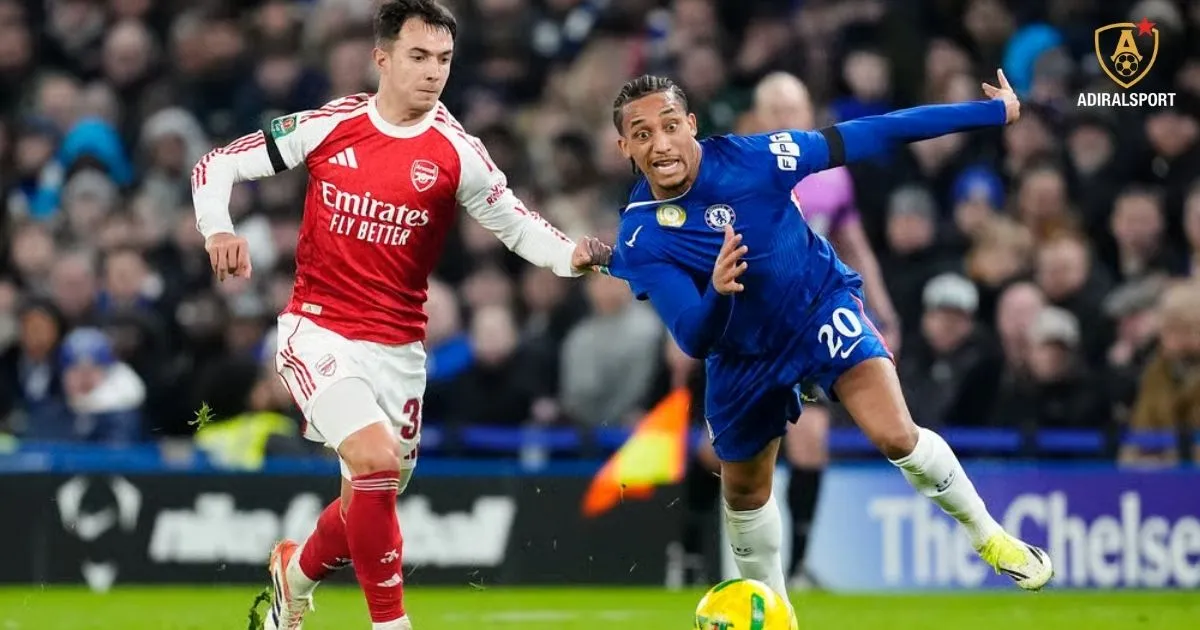
Chelsea vs Arsenal Tactical Analysis: Inside the 5-Goal Carabao Cup Thriller
Table of Contents
Intoduction
The rain at Stamford Bridge always smells different when the stakes are this high. You know the feeling—that specific mix of damp concrete, nervous energy, and the faint, acrid scent of flares burning in the distance. It was a Wednesday night that promised everything: a London derby, a semi-final spot on the line, and a tactical showdown that would be dissected for weeks.
If you stood in the Shed End as the players walked out, you felt the weight of the season shifting. This wasn’t just another game. This was the first leg of the Carabao Cup semi-final, a night where heroes are forged and managers are broken. For you, the fan, the analyst, the observer, this Chelsea vs Arsenal tactical analysis isn’t just about formations or xG; it’s about the emotional rollercoaster of a 3-2 thriller that left everyone breathless. It’s about understanding why your heart broke when Zubimendi scored, and why it soared when Garnacho rifled in that second goal.
Match Overview & Timeline: The Story of the Game
To truly grasp the magnitude of this encounter, you have to look beyond the final scoreline. Yes, Arsenal took a 3-2 victory back to North London, but the narrative of the match was far more complex. As you dive into this Chelsea vs Arsenal tactical analysis, keep in mind the context: January 14, 2026. The winter transfer window is buzzing, injuries are mounting, and every decision made by Liam Rosenior and Mikel Arteta is under the microscope.
The timeline of the match reads like a screenplay of defensive lapses and attacking brilliance:
- 07’ – GOAL Arsenal (0-1): The deadlock didn’t last long. Ben White, operating almost as a secondary striker on set-pieces, rose highest to meet a Declan Rice corner. It was a sucker punch that set the tone for the visitors.
- 49’ – GOAL Arsenal (0-2): Just after the break, the Gunners doubled their lead. Viktor Gyokeres, a nightmare for defenders all season, tapped in a low cross.
- 57’ – GOAL Chelsea (1-2): Hope returned. Alejandro Garnacho, fresh off the bench, smashed a half-volley past David Raya.
- 71’ – GOAL Arsenal (1-3): A transition masterclass. Martin Zubimendi finished a counter-attack that cut Chelsea open.
- 84’ – GOAL Chelsea (2-3): Garnacho again. A moment of individual brilliance that keeps the tie alive for the second leg.
Understanding this timeline is crucial for your Chelsea vs Arsenal tactical analysis because it highlights the reactive nature of the game. Every time Chelsea found a rhythm, Arsenal punctured it with clinical efficiency.
Lineups and Formations: Rosenior vs Arteta
When you looked at the team sheets an hour before kickoff, you likely raised an eyebrow at Rosenior’s selection. The decision to bench Garnacho in favor of Cole Palmer on the wing was the first major talking point of this Chelsea vs Arsenal tactical analysis.
Chelsea (4-2-3-1)
- Goalkeeper: Robert Sánchez
- Defenders: Axel Disasi, Wesley Fofana (Sub: Jorrel Hato 75′), Levi Colwill, Marc Cucurella
- Midfielders: Moisés Caicedo, Enzo Fernández
- Attacking Midfielders: Estevão, Cole Palmer (Sub: Alejandro Garnacho 53′), Pedro Neto
- Forward: Nicolas Jackson
Rosenior set up to control possession, using Enzo and Caicedo to bait Arsenal’s press. However, the lack of direct width on the right (until Garnacho came on) meant Arsenal could compress the pitch easily.
Arsenal (4-3-3)
- Goalkeeper: David Raya
- Defenders: Ben White, William Saliba, Gabriel Magalhães, Jurriën Timber
- Midfielders: Declan Rice, Martin Zubimendi, Martin Ødegaard (Sub: Mikel Merino 68′)
- Forwards: Bukayo Saka, Viktor Gyokeres, Gabriel Martinelli
Arteta’s side looked like a well-oiled machine. The inclusion of Zubimendi alongside Rice gave them a level of control that Chelsea simply couldn’t match in the first hour. This midfield box was the engine room that powered their victory.
Analyzing Arsenal’s Set-Piece Dominance
If you have watched Arsenal over the last two seasons, you know that conceding a corner against them is as dangerous as conceding a penalty. This aspect of the Chelsea vs Arsenal tactical analysis cannot be overstated. Nicolas Jover, Arsenal’s set-piece coach, once again proved his worth.
The opening goal in the 7th minute wasn’t luck; it was geometry. Arsenal overloaded the six-yard box, crowding Robert Sánchez. You could see Ben White starting his run from deep, almost unnoticed by Chelsea’s zonal markers. As Rice whipped the ball to the near post, the blockers did their job, clearing a path for White.
- The Failure: Chelsea’s zonal system fell apart. Colwill was blocked off, and Sánchez hesitated. In elite football, hesitation is fatal.
- The Stat: That was Arsenal’s 25th set-piece goal of the 2025/2026 season.
For you as a reader trying to improve your own tactical understanding, watch how Arsenal creates chaos to generate order. They treat set-pieces not as restarts, but as structured attacks.
The Battle for Midfield Control: Zubimendi vs Enzo
The middle of the park was where the game was won and lost. This is often the most complex part of any Chelsea vs Arsenal tactical analysis, but let’s break it down simply.
You saw Enzo Fernández trying to dictate play, dropping deep between the center-backs to pick up the ball. The problem? Arsenal knew he would do that. Arteta instructed Ødegaard to man-mark Enzo out of the game in the build-up phase. This forced Chelsea to play wide to Disasi or Cucurella, who are less comfortable progressors of the ball.
Conversely, Martin Zubimendi was a ghost. He drifted into the half-spaces, finding pockets of air behind Chelsea’s aggressive press. When Chelsea pushed up, Zubimendi dropped; when they sat back, he drove forward.
- Transition Play: Arsenal’s third goal was the perfect example. Caicedo lost possession, and within three seconds, the ball was with Zubimendi at the edge of the box. His finish was calm, but the movement to get there was electric.
- Physicality: You cannot ignore the physical disparity. Rice and Zubimendi simply bullied Chelsea’s midfield in 50/50 duels during the first half.
Impact Substitutions: The Garnacho Effect
If the first 50 minutes belonged to Arteta, the final 40 belonged to Alejandro Garnacho. When discussing the turning points in this Chelsea vs Arsenal tactical analysis, his introduction is “Exhibit A.”
Liam Rosenior realized his mistake early. The Chelsea attack was too static, playing in front of Arsenal’s low block. Garnacho changed the geometry of the game. He didn’t just want the ball to feet; he wanted to hurt Ben White in behind.
- The Tactical Shift: With Garnacho on the left and Neto switching to the right, Chelsea suddenly had verticality. They stopped playing “u-shape” football (passing around the defense) and started piercing through it.
- The Result: Two goals. His first was pure aggression—attacking a loose ball. His second was finesse—cutting inside and curling it home.
- The Lesson: You need runners. Possession without penetration is pointless, and Garnacho provided the penetration Chelsea desperately needed.
Defensive Fragilities: Why Chelsea Conceded Three
You cannot write a honest Chelsea vs Arsenal tactical analysis without addressing the elephant in the room: Chelsea’s defense. Conceding three goals at home in a semi-final is a massive hurdle to overcome.
- Full-Back Isolation: Marc Cucurella had a torrid evening. Arsenal constantly created 2v1 situations against him with Saka and White overlapping. The second goal came directly from this overload.
- Center-Back Disconnect: Fofana and Colwill looked like strangers. When Gyokeres dropped deep (false nine movement), Fofana followed him, leaving a massive gap in the defensive line that Martinelli exploited repeatedly.
- Goalkeeping: While Sánchez is a great shot-stopper, his command of the area on crosses remains a weakness that teams like Arsenal ruthlessly target.
Statistical Breakdown: 2025/2026 Season Context
Numbers don’t lie, and they help ground our Chelsea vs Arsenal tactical analysis in objective reality. Let’s look at the data from the match.
| Statistic | Chelsea | Arsenal |
| Goals Scored | 2 | 3 |
| Possession | 48% | 52% |
| Shots (Total) | 11 | 14 |
| Shots (On Target) | 5 | 7 |
| xG (Expected Goals) | 1.45 | 2.10 |
| Pass Completion % | 86% | 89% |
| Corners | 5 | 8 |
| Big Chances Created | 2 | 4 |
Interpretation:
What do these numbers tell you? They tell you that Arsenal created higher-quality chances. Their xG of 2.10 suggests they deserved their goals. Chelsea’s xG of 1.45, heavily bolstered by Garnacho’s brilliance, shows they were struggling to create until the substitutions were made.
Key Takeaways for the Second Leg
As we look ahead to February 3rd, what does this Chelsea vs Arsenal tactical analysis suggest for the return fixture at the Emirates?
- Arsenal’s Advantage: They have the lead and the home crowd. They can afford to sit deeper and play on the counter, utilizing the pace of Martinelli and Saka.
- Chelsea’s Dilemma: Rosenior has to attack, but he cannot leave his defense exposed like he did tonight. You might see a switch to a back three (3-4-3) to provide more defensive solidity while keeping the attacking width.
- The Wildcard: Estevão was quiet tonight. If he wakes up in the second leg, his creativity could be the key to unlocking Arsenal’s low block.
Conclusion / Chelsea vs Arsenal Tactical Analysis
In the end, this match was a microcosm of where these two teams stand in 2026. Arsenal is a mature, ruthless tactician’s dream. Chelsea is a chaotic, talented, work-in-progress. This Chelsea vs Arsenal tactical analysis has highlighted the gaps in quality and cohesion, but it also highlighted the raw talent that keeps Chelsea dangerous.
The 3-2 scoreline sets up a tantalizing second leg. You won’t want to miss it. The tactical battle between Rosenior’s adjustments and Arteta’s game management will decide who lifts the Carabao Cup.
FAQ: Chelsea vs Arsenal Tactical Analysis
Q1: Who was the standout player in this match?
While Alejandro Garnacho changed the game for Chelsea, Viktor Gyokeres was the most consistent threat, earning him the Man of the Match in most ratings.
Q2: What is the main focus of this Chelsea vs Arsenal Tactical Analysis?
We focus on the tactical setups, the midfield battle between Zubimendi and Enzo, and the defensive errors that led to a high-scoring affair.
Q3: How many times did Arsenal score from open play?
Arsenal scored two goals from open play (Gyokeres and Zubimendi) and one from a set-piece (White).
Q4: Why is the keyword Chelsea vs Arsenal Tactical Analysis important?
It helps fans find in-depth breakdowns of the strategy behind the game, moving beyond simple match reports.
Q5: Can Chelsea turn this around in the second leg?
Yes. As this Chelsea vs Arsenal tactical analysis shows, Chelsea’s attack caused Arsenal panic in the final 20 minutes. If they start with that intensity, the tie is alive.
Q6: What date was this match played?
The match took place on January 14, 2026.