Barcelona VS Frankfurt Tactical Analysis
Table of Contents
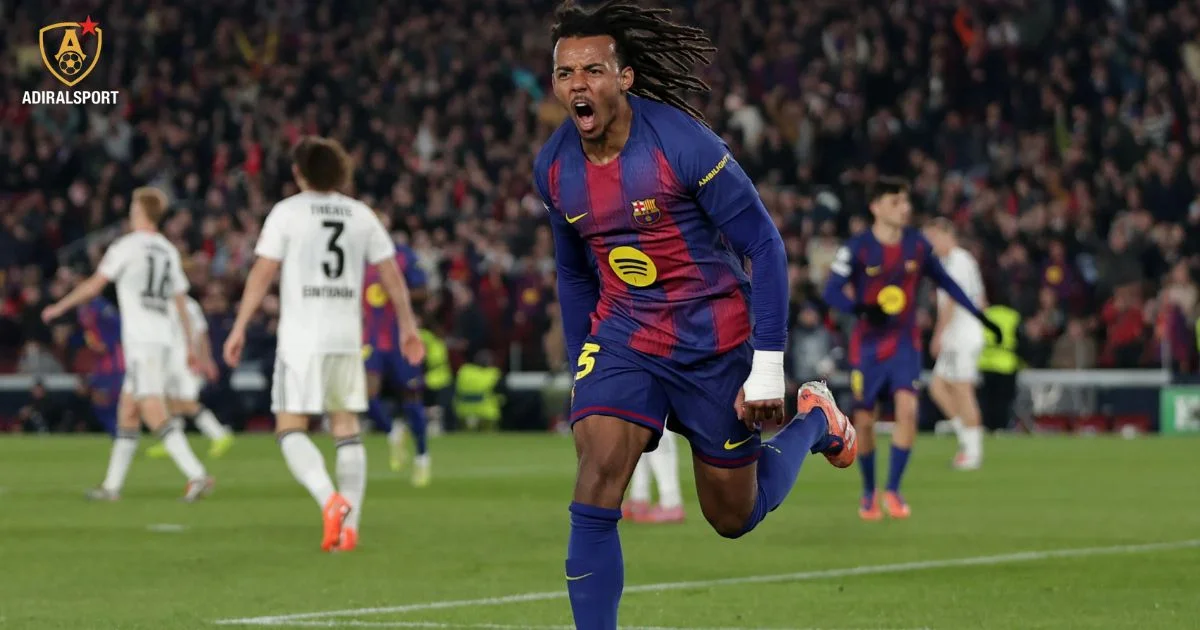
You remember the feeling, don’t you? That sinking sensation in the pit of your stomach from April 2022. The “White Camp Nou.” The night the stands were flooded with Eintracht Frankfurt jerseys, and Xavi’s Barcelona crumbled under the weight of a humiliation that wasn’t just sporting, but institutional. Fast forward to December 9, 2025. The air inside the newly renovated Spotify Camp Nou is cold, but the atmosphere is white-hot. This wasn’t just a Champions League group stage match; it was an exorcism.
When the final whistle blew, sealing a 2-1 victory for the Blaugrana, you could feel the collective release of tension. But the scoreline barely scratches the surface of what actually happened on that pitch. To truly understand how Hansi Flick’s men overturned a first-half deficit against Dino Toppmöller’s disciplined block, you need a deep dive into the mechanics of the game. This Barcelona VS Frankfurt Tactical Analysis explores the strategic shifts, the individual brilliance, and the managerial gambits that defined this chaotic, beautiful night in Catalonia.
Setting the Stage: A Clash of Ideologies
Before we dissect the 90 minutes, you have to understand the context entering this fixture. We are deep into the 2025/26 season. Barcelona, under Hansi Flick, has transformed into a vertical, high-intensity machine, moving away from the patient “tiki-taka” of old to something more direct and ruthless. Eintracht Frankfurt, conversely, remains one of Europe’s most dangerous transition teams.
In this Barcelona VS Frankfurt Tactical Analysis, the contrast was stark from the first whistle. Flick’s setup was designed to suffocate Frankfurt in their own half, employing a staggeringly high defensive line. Toppmöller, fully aware of Barça’s historical vulnerability to speed, set his team up to absorb pressure and spring like a coiled spring. You saw this dynamic play out immediately: Barcelona holding the ball, Frankfurt holding their breath, waiting for the mistake.
Lineups and Initial Setups
To get the most out of this Barcelona VS Frankfurt Tactical Analysis, let’s look at the chess pieces on the board. Injuries forced both managers into specific adjustments that dictated the flow of the game.
FC Barcelona (4-2-3-1)
- Goalkeeper: Joan García.
- Defense: Jules Koundé (RB), Pau Cubarsí (CB), Iñigo Martínez (CB), Alejandro Balde (LB).
- Midfield: Pedri (CM), Eric García (Pivot), Fermín López (CAM).
- Attack: Lamine Yamal (RW), Robert Lewandowski (ST), Raphinha (LW).
Tactical Note: You’ll notice the absence of Gavi and Araújo, which forced Eric García into the pivot role—a decision that would become a focal point of criticism in the first half of our Barcelona VS Frankfurt Tactical Analysis.
Eintracht Frankfurt (3-4-2-1)
- Goalkeeper: Markus Zetterer.
- Defense: Rasmus Kristensen (RCB), Robin Koch (CB), Arthur Theate (LCB).
- Midfield: Nathaniel Brown (LWB), Hugo Larsson (CM), Ellyes Skhiri (CM), Farès Chaïbi (RWB).
- Attack: Mario Götze (LF), Ansgar Knauff (RF), Ritsu Doan (False 9).
Tactical Note: Frankfurt played without a traditional striker, using Doan and Knauff’s mobility to target the space behind Barça’s fullbacks.
The First Half: Frankfurt’s Transition Trap
If you were watching the first 45 minutes, you likely felt a sense of déjà vu. Barcelona dominated possession, circulating the ball with rhythm but lacking penetration. This is a recurring theme in any Barcelona VS Frankfurt Tactical Analysis: possession does not equal control against a German side.
The 21st Minute Breakdown
The opening goal was a masterclass in exploiting a high line. When you look at the replay, pay attention to Eric García. As the single pivot in possession, he was momentarily pressed by Hugo Larsson. A loose touch allowed Frankfurt to turn over possession instantly.
- The Trigger: Skhiri wins the second ball.
- The Pass: Nathaniel Brown spots Ansgar Knauff making a diagonal run from the right, cutting across the blindside of Iñigo Martínez.
- The Finish: Joan García rushed out, but Knauff’s finish was clinical.
This moment defined the first half of the Barcelona VS Frankfurt Tactical Analysis. It exposed the fragility of playing a high line without a destroyer in midfield. Frankfurt didn’t need the ball; they just needed space. And Barcelona gave them 50 meters of it behind the defense.
The Turning Point: Hansi Flick’s Halftime Adjustments
You can often judge a manager not by the starting plan, but by the reaction to adversity. Hansi Flick’s halftime team talk must have been blistering, but his tactical tweak was subtle yet decisive.
The introduction of Marcus Rashford for Fermín López changed the geometry of the match. While Fermín is a brilliant interior player, he was getting crowded out by Frankfurt’s dense midfield block. Rashford brought pure pace and width.
Altering the Attack
In this phase of the Barcelona VS Frankfurt Tactical Analysis, you see Barcelona shift from a 4-2-3-1 to something resembling a 4-2-4 in possession.
- Rashford (Left): Stayed wide, pinning Kristensen back.
- Yamal (Right): Isolated Theate 1v1.
- Raphinha (Free Role): Moved centrally to overload the midfield, creating a 3v2 against Larsson and Skhiri.
This forced Frankfurt’s wing-backs, Brown and Chaibi, to drop into a back five. Suddenly, Frankfurt couldn’t get out. They were pinned deep, unable to launch the counters that defined their first half.
The Koundé Brace: An Unlikely Hero
No one predicting the Barcelona VS Frankfurt Tactical Analysis would have pinned Jules Koundé as the primary goal threat. Yet, within a span of three minutes, the French defender turned the game around.
The Equalizer (50′)
It came from a recycled corner. Rashford, operating on the left, didn’t just cross blindly. He waited for Frankfurt’s line to push out. Koundé, ghosting in at the back post, attacked the ball with the ferocity of a seasoned striker. His header back across the goal left Zetterer stranded.
The Winner (53′)
Three minutes later, the exact same vulnerability was exploited, but from the opposite flank. Lamine Yamal, mesmerizing his marker with quick footwork, whipped in an inswinging cross. Koundé, recognizing the zonal marking weakness in Frankfurt’s setup, made a near-post run usually reserved for Lewandowski.
This specific passage of play is crucial to your understanding of the Barcelona VS Frankfurt Tactical Analysis. It wasn’t just about “spirit” or “passion”; it was a targeted tactical overload of the penalty box, forcing Frankfurt’s defenders to make decisions they weren’t equipped to make.
Statistical Deep Dive
Numbers don’t lie, and they provide the backbone for our Barcelona VS Frankfurt Tactical Analysis. Let’s break down the key metrics that defined the match.
| Metric | FC Barcelona | Eintracht Frankfurt | Analysis |
| Possession | 62% | 38% | Barcelona controlled the tempo, but Frankfurt was comfortable without the ball. |
| xG (Expected Goals) | 2.45 | 0.88 | The quality of Barça’s chances, particularly in the second half, was far superior. |
| Big Chances Created | 5 | 1 | Flick’s side broke the low block effectively after the break. |
| Passes into Final Third | 68 | 19 | This stat highlights the territorial dominance of the home side. |
| Duels Won | 55% | 45% | A key indicator of Barça’s improved physical intensity in the 2025/26 season. |
When you review this table within the context of the Barcelona VS Frankfurt Tactical Analysis, it becomes clear that while the scoreline was close, the performance gap in the second half was significant.
Key Player Performances
Lamine Yamal: The Dribbling Enigma
You cannot write a Barcelona VS Frankfurt Tactical Analysis without marveling at Lamine Yamal. At this stage of his career, he has matured from a flashy winger to a tactical weapon. Frankfurt consistently doubled him with Brown and Theate, yet he completed 6 out of 8 dribbles. His gravity pulls defenders out of shape, creating the pockets of space that Pedri and Raphinha exploit.
Pedri: The Metronome
While Koundé got the goals, Pedri controlled the chaos. In the second half, his heat map shows him operating almost exclusively in the left half-space, linking with Rashford. He completed 94% of his passes, acting as the pressure valve whenever Frankfurt tried to press.
Mario Götze: The Fading Light
For Frankfurt, Götze’s role was pivotal in the first half but nonexistent in the second. As the link man, he needed to hold up play to allow Knauff to run. Once Barça cut off the supply line to him (by pressing Skhiri aggressively), Frankfurt’s attack died.
Tactical Flaws and Vulnerabilities
Even in victory, you must be critical. A comprehensive Barcelona VS Frankfurt Tactical Analysis exposes the lingering issues in Flick’s system.
- The High Line Risk: The goal conceded in the 21st minute is a warning. Against teams with elite speed (think Mbappe or Vinicius), this high line is suicidal without faster recovery defenders.
- Pivot Problems: Eric García is a capable distributor, but he lacks the defensive instincts of a natural CDM. Without a true destroyer, the center-backs are often left 2v2 against counter-attacks.
- Set Piece Defending: Ironically, while Barça won via headers, they looked shaky defending corners. Frankfurt won three headers in the Barça box that could have easily resulted in a goal on another night.
Why This Win Matters for Season 2025/2026
This wasn’t just three points. This match was a litmus test for the mental fortitude of the squad. In the 2025/26 Champions League format, finishing in the top 8 is vital to avoid the playoff round.
By winning this game, Barcelona moved to 13 points after 6 games, essentially guaranteeing their spot in the knockouts. But more importantly, the Barcelona VS Frankfurt Tactical Analysis shows a team that can adapt. They faced a low block, they faced a deficit, and they faced the ghosts of their past—and they beat them all.
Managerial Masterclass: Flick vs Toppmöller
The battle on the touchline was as intense as the one on the pitch.
Hansi Flick showed why he is a treble winner. His refusal to panic at 0-1, maintaining the high line but increasing the width of the attack, was brave. He trusted his players’ technical superiority to eventually break down the German wall.
Dino Toppmöller had a perfect game plan for 45 minutes. However, his failure to react to Rashford’s introduction is a black mark in this Barcelona VS Frankfurt Tactical Analysis. Frankfurt continued to defend narrow, allowing Rashford and Yamal to rain crosses into the box, eventually leading to their undoing.
FAQ: Barcelona VS Frankfurt Tactical Analysis
Q1: What does the Barcelona VS Frankfurt Tactical Analysis say about Barça’s defense?
The Barcelona VS Frankfurt Tactical Analysis indicates that while the high line is effective for pressing, it remains highly vulnerable to direct counter-attacks, especially when the midfield pivot is bypassed.
Q2: Who was the MVP according to the Barcelona VS Frankfurt Tactical Analysis?
Jules Koundé. Beyond his two goals, his ability to switch between right-back and a third center-back role gave Barcelona the tactical flexibility needed to control the second half.
Q3: How did Rashford change the Barcelona VS Frankfurt Tactical Analysis?
Rashford provided natural width on the left, which Fermín López couldn’t offer. This stretched Frankfurt’s back five, creating gaps in the half-spaces and allowing for better crossing opportunities.
Q4: Is the Barcelona VS Frankfurt Tactical Analysis relevant for future matches?
Absolutely. It provides a blueprint for how Barcelona handles low-block teams that rely on transitions. Future opponents will study how Frankfurt hurt Barça in the first half.
Q5: What was the final xG in the Barcelona VS Frankfurt Tactical Analysis?
Barcelona generated 2.45 xG compared to Frankfurt’s 0.88, confirming that the 2-1 victory was a fair reflection of the chances created.
Conclusion
As you leave the stadium or turn off your TV, the narrative is clear. This Barcelona VS Frankfurt Tactical Analysis tells the story of a team that is maturing. The trauma of 2022 is gone, replaced by the gritty determination of 2025. Barcelona didn’t play a perfect game, but they played a winning one. They identified a tactical problem, implemented a risky solution, and executed it with precision.
For Frankfurt, it’s a lesson in concentration. For Barcelona, it’s proof that under Hansi Flick, the Camp Nou is once again a fortress where visiting teams come to suffer, not to celebrate.
Ready to dive deeper into the stats? Check out the full breakdown of every player’s heat map on our interactive dashboard.