
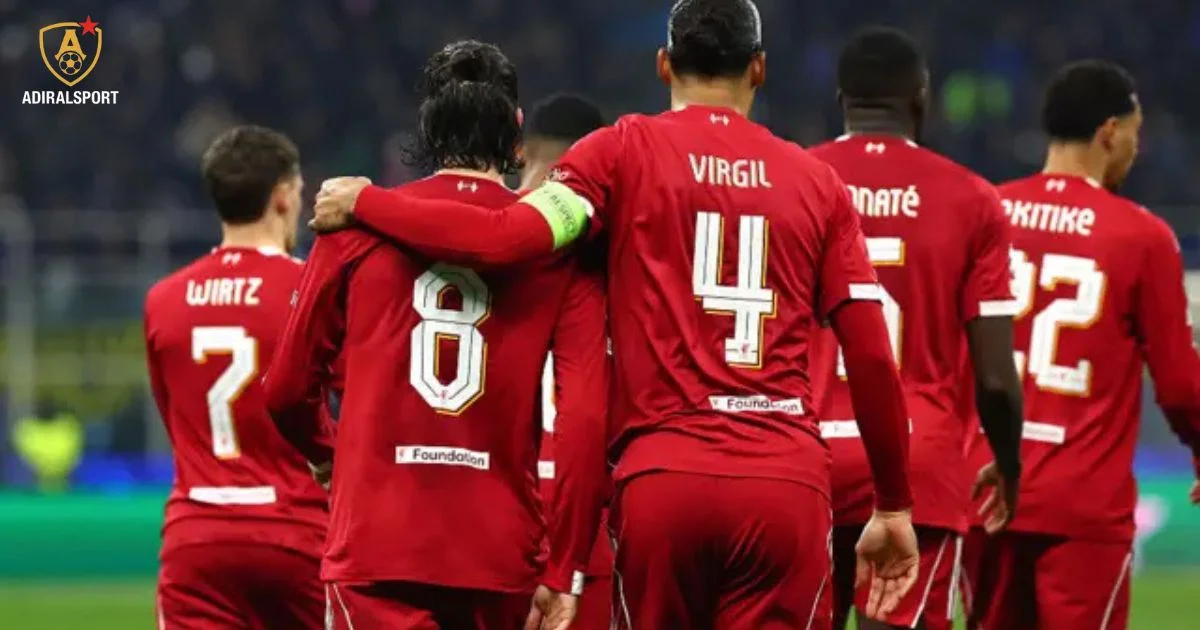
Inter Milan VS Liverpool Tactical Analysis
Inter Milan VS Liverpool Tactical Analysis
Table of Contents
Date: December 9, 2025
Venue: San Siro, Milan
Score: Inter Milan 0 – 1 Liverpool (Szoboszlai 88′ pen)
The Weight of the San Siro on Your Shoulders
You know that feeling when the air in a stadium feels heavy enough to crush you? That is exactly what the atmosphere at the San Siro felt like on this cold December night. As a Liverpool supporter, or even just a neutral observer of the beautiful game, you could feel the tension radiating through the screen. This wasn’t just another group stage match; it was a reckoning.
For days, your timeline has been dominated by one story: Mohamed Salah. The Egyptian King, the man who has defined an era at Anfield, was left at home. Dropped by Arne Slot after a public fallout that threatened to derail the entire season. You walked into this match wondering if this was the night the wheels would finally come off. Without Salah, without the safety net of his goals, who would step up?
But as the final whistle blew and the traveling Kop roared into the Milanese night, you realized you had witnessed something significant. This Inter Milan VS Liverpool Tactical Analysis isn’t just about a 1-0 win; it is about a team finding its spine when its back was against the wall. It is about Arne Slot proving that his system can survive without its biggest star.
In this comprehensive guide, you will dive deep into the mechanics of the match. You will understand how Liverpool controlled the chaos, how Cristian Chivu’s Inter tried to strangle the game, and why Dominik Szoboszlai’s 88th-minute penalty was more than just a goal—it was a statement.
1. The Context: A Week of Turmoil
To fully appreciate this Inter Milan VS Liverpool Tactical Analysis, you have to understand the storm that preceded it. You aren’t just looking at ninety minutes of football; you are looking at a response to a crisis. Liverpool came into this game with just one win in their last six matches. The noise around the club was deafening.
Arne Slot made the boldest call of his managerial career by leaving Salah out of the squad entirely. If you are Arne Slot, you are gambling your reputation on 11 players executing a perfect game plan against the Italian champions. For Inter, managed by the pragmatic Cristian Chivu, this was an opportunity to twist the knife. They knew Liverpool were fragile. They knew you were nervous.
This match was a collision of two desperate needs: Liverpool’s need for stability and Inter’s need to assert dominance at home.
2. Lineups and Formations: The Chess Board Set / Inter Milan VS Liverpool Tactical Analysis
Before the first ball was kicked, the team sheets gave you the first clues for our Inter Milan VS Liverpool Tactical Analysis. The absence of Salah forced a reshuffle that changed the entire geometry of Liverpool’s attack.
Liverpool Starting XI (4-3-3)
- Manager: Arne Slot
- GK: Alisson Becker
- DEF: Joe Gomez, Ibrahima Konaté, Virgil van Dijk (C), Andy Robertson
- MID: Curtis Jones, Ryan Gravenberch, Alexis Mac Allister
- FWD: Dominik Szoboszlai, Alexander Isak, Hugo Ekitiké
Tactical Note: You will notice Szoboszlai starting on the right wing, a position usually reserved for Salah. However, unlike Salah who stays wide and cuts in, Szoboszlai operated as a “wide playmaker,” tucking inside to overload the midfield. This was Slot’s answer to Inter’s 3-5-2: outnumber them in the center.
Inter Milan Starting XI (3-5-2)
- Manager: Cristian Chivu
- GK: Yann Sommer
- DEF: Yann Bisseck, Manuel Akanji, Alessandro Bastoni
- MID: Carlos Augusto, Nicolò Barella, Hakan Çalhanoğlu, Piotr Zielinski, Federico Dimarco
- FWD: Marcus Thuram, Lautaro Martínez
Tactical Note: Chivu’s setup was designed to be a mirror. By matching Liverpool’s intensity in the middle with Barella and Çalhanoğlu, he hoped to isolate Liverpool’s full-backs. If you watched closely, you saw Bastoni stepping up aggressively to engage Szoboszlai, knowing there was no Salah to run in behind him.
3. Match Timeline: The Story of the Game / Inter Milan VS Liverpool Tactical Analysis
- Kickoff: High-intensity pressing from Liverpool. You could see immediately that Slot had instructed his team to suffocate Inter’s build-up.
- 22’ – The Warning Shot: Curtis Jones drives through the midfield and forces a save from Sommer. The first sign that Liverpool’s midfield overload is working.
- 32’ – The Disallowed Goal: Drama. Ibrahima Konaté rises highest to head home a corner. The away end erupts. But wait—VAR intervenes. A handball by Hugo Ekitiké in the build-up rules it out. If you were watching, you felt the deflation instantly.
- 45+6’ – The Save: Just before halftime, Lautaro Martínez connects with a cross. It looks like a certain goal. Alisson Becker, who has been a spectator for 40 minutes, produces a reaction save that defies physics.
- 57’ – Tactical Foul: Henrikh Mkhitaryan (subbed on) picks up a yellow card, highlighting Inter’s frustration with Liverpool’s possession.
- 80’ – The Substitution: Florian Wirtz enters the fray. This is the moment the game changes.
- 87’ – The Penalty: Wirtz drifts into the box. Alessandro Bastoni, tired and frustrated, tugs his shirt. It’s soft, but it’s clumsy. VAR confirms the penalty.
- 88’ – GOAL (0-1): Dominik Szoboszlai steps up. The pressure is immense. He smashes it past Sommer.
- FT: Liverpool win 1-0.
4. Comprehensive Inter Milan VS Liverpool Tactical Analysis
Now, let’s get into the mechanics. How did Liverpool actually win this? What did Inter do wrong? This section of the Inter Milan VS Liverpool Tactical Analysis breaks down the three key phases of the game.
Phase 1: Liverpool’s “Control” Without Salah
The biggest question you had going into this match was: “Where will the creativity come from?” Without Salah, Liverpool lost their primary outlet for transition attacks. Arne Slot’s solution was Control.
Instead of the heavy metal football of the past, Liverpool played a game of patience. With Szoboszlai and Ekitiké tucking inside, Liverpool effectively played with four midfielders. This created a box midfield (Gravenberch-Mac Allister-Jones-Szoboszlai) that Inter’s trio of Barella, Çalhanoğlu, and Zielinski couldn’t get near.
If you look at the pass maps, you will see Ryan Gravenberch was the hub. He completed 92% of his passes, constantly recycling the ball away from Inter’s pressure. This wasn’t exciting, but it was safe. It silenced the San Siro crowd, which was exactly what Slot wanted.
Phase 2: Cristian Chivu’s Defensive Low Block
From the perspective of the Inter Milan VS Liverpool Tactical Analysis, you have to credit Chivu for his defensive organization. Realizing Liverpool were dominating possession (62% in the first half), Chivu dropped his wing-backs, Dimarco and Augusto, into a flat back five.
This 5-3-2 formation is notoriously hard to break down. Inter invited Liverpool to cross the ball, knowing that Bisseck, Akanji, and Bastoni are aerial giants. Liverpool fell into this trap repeatedly in the first hour, swinging in crosses that were easily cleared.
However, Chivu’s mistake was in the transition. By dropping so deep, he isolated Thuram and Martínez. Every time Inter cleared the ball, it just came straight back to Virgil van Dijk. You could see the frustration on Lautaro Martínez’s face; he was pressing on his own, chasing shadows while his midfield sat 40 yards behind him.
Phase 3: The Wirtz Effect and The Half-Space
The game was won when Arne Slot introduced Florian Wirtz. Until the 80th minute, Liverpool’s attack was predictable. Isak was isolated, and Ekitike was working hard but creating little.
Wirtz changed the dynamic of the Inter Milan VS Liverpool Tactical Analysis. Instead of staying wide or hugging the touchline, Wirtz operated in the “half-spaces”—that pockets of space between the centre-back (Bastoni) and the wing-back (Dimarco).
By drifting into this zone, Wirtz forced Bastoni to make a decision: stay in the line and let Wirtz turn, or step out and leave a gap? In the 87th minute, Bastoni hesitated. He stepped out late, realized he was beaten by Wirtz’s quick turn, and panicked. That shirt pull was a direct result of tactical fatigue induced by Wirtz’s movement.
5. Statistical Deep Dive: Inter Milan VS Liverpool Tactical Analysis
Numbers don’t lie, and they validate what your eyes saw. This table summarizes the core data driving our Inter Milan VS Liverpool Tactical Analysis.
| Statistic | Inter Milan | Liverpool |
| Goals | 0 | 1 |
| xG (Expected Goals) | 0.35 | 1.12 |
| Possession | 38% | 62% |
| Shots (On Target) | 9 (2) | 12 (5) |
| Passes Completed | 289 | 512 |
| Pass Accuracy | 76% | 88% |
| Corners | 2 | 7 |
| Big Chances Created | 0 | 2 |
Analysis of the Data:
You can clearly see the disparity in possession. Liverpool completing almost double the number of passes as Inter is staggering for an away game in the Champions League. The low xG for Inter (0.35) is damning for Chivu; it proves his team offered almost zero threat going forward. The Inter Milan VS Liverpool Tactical Analysis shows that while the scoreline was close, the control was entirely one-sided.
6. Player Focus: The Game Changers / Inter Milan VS Liverpool Tactical Analysis
In every match, there are individual battles that decide the war. Here is how the key players influenced the Inter Milan VS Liverpool Tactical Analysis.
Dominik Szoboszlai (Liverpool)
- Role: The Captain without the armband. He filled the creative void left by Salah.
- Performance: You saw him everywhere. He dropped deep to collect the ball, he sprinted wide to support Gomez, and he had the composure to score the penalty.
- Key Stat: 11.4km distance covered—the highest on the pitch.
Alisson Becker (Liverpool)
- Role: The Savior.
- Performance: Goalkeeping is about concentration. For 89 minutes, he did nothing. But in the 45th minute, he won Liverpool the game. That save from Lautaro wasn’t just a save; it demoralized Inter. If that goes in, the entire Inter Milan VS Liverpool Tactical Analysis changes.
Alessandro Bastoni (Inter Milan)
- Role: The Tragic Hero.
- Performance: He was immense for 86 minutes. He won 5/5 aerial duels against Isak. But elite football is cruel. One second of madness, one tug of a shirt, and his night was ruined.
Ryan Gravenberch (Liverpool)
- Role: The Metronome.
- Performance: If you want to know why Liverpool controlled the game, watch Gravenberch. He didn’t do anything flashy, but he never lost the ball. He allowed Mac Allister to push forward while he swept up everything in front of the defense.
7. The Salah Factor: A Tactical Blessing in Disguise?
It feels controversial to say, but you have to ask: Did Liverpool play better as a team without Salah?
This Inter Milan VS Liverpool Tactical Analysis suggests that without Salah, Liverpool were more defensively solid. Usually, Liverpool’s right side (Salah and Trent Alexander-Arnold/Bradley) is their most dangerous attacking avenue, but also their weakest defensive point. Opponents target it constantly.
With Szoboszlai on the right and Joe Gomez at right-back, that flank was locked down. Dimarco, usually Inter’s most dangerous outlet, was completely nullified. He couldn’t attack because he was too busy worrying about Szoboszlai drifting inside.
By removing the “star” who stays forward, Slot demanded 11 players defend. You saw Isak chasing back to his own box. You saw Ekitike making tackles. This level of collective defensive responsibility is hard to achieve when one player has a free role.
8. What This Means for Season 2025/2026 / Inter Milan VS Liverpool Tactical Analysis
The result of this match has huge implications for the 2025/2026 Champions League campaign.
- For Liverpool: They move to 8th in the League Phase table with 12 points. This is the “sweet spot” for direct qualification to the Round of 16. More importantly, it buys Arne Slot time. He has stared down his biggest player and won.
- For Inter Milan: They drop to 5th. They are still safe, but the lack of attacking threat is worrying. Chivu needs to find a Plan B when his counter-attacks are stifled.
9. FAQ: Inter Milan VS Liverpool Tactical Analysis
Q: Why was Mohamed Salah not playing?
A: Mohamed Salah was dropped from the matchday squad by manager Arne Slot following a reported disagreement over tactics and public comments where Salah claimed he was being “thrown under the bus.” This absence is a central theme of our Inter Milan VS Liverpool Tactical Analysis.
Q: How does this result affect the Champions League Standings?
A: Liverpool climbs to 8th place, putting them in a strong position to avoid the playoff round. Inter Milan sits in 5th place, also on 12 points but with a better goal difference.
Q: What was the main tactical takeaway for Inter?
A: The Inter Milan VS Liverpool Tactical Analysis highlights that while Inter is defensively robust, their 3-5-2 formation lacks a connection between midfield and attack when they play against high-pressing teams.
Q: Was the penalty decision correct?
A: It was soft, but correct by the letter of the law. Bastoni pulled Wirtz’s shirt, impeding his movement in the box. In the VAR era, you cannot take that risk.
Q: Who was the Man of the Match?
A: Dominik Szoboszlai was awarded Man of the Match. Not just for the goal, but for his tactical discipline and work rate which defined the Inter Milan VS Liverpool Tactical Analysis.
10. Conclusion: Efficiency Over Flair / Inter Milan VS Liverpool Tactical Analysis
As you reflect on this match, you realize it wasn’t a classic in the traditional sense. It wasn’t end-to-end action. It was a tactical battle, a game of chess played on grass. But for Liverpool fans, it was beautiful.
This 0-1 victory at the San Siro is a validation of Arne Slot’s methods. He showed that the system is greater than any individual, even one as legendary as Mohamed Salah. The Inter Milan VS Liverpool Tactical Analysis proves that defensive organization, midfield control, and patience can conquer even the most hostile environments.
For Cristian Chivu and Inter, it is a lesson in fine margins. They defended bravely, but you cannot defend for 90 minutes against a team like Liverpool without eventually cracking.
As we move deeper into the 2025/2026 season, you should keep an eye on this Liverpool team. They might be less explosive without Salah, but they are becoming incredibly difficult to beat. And in the Champions League, difficult to beat is exactly what you want to be.