
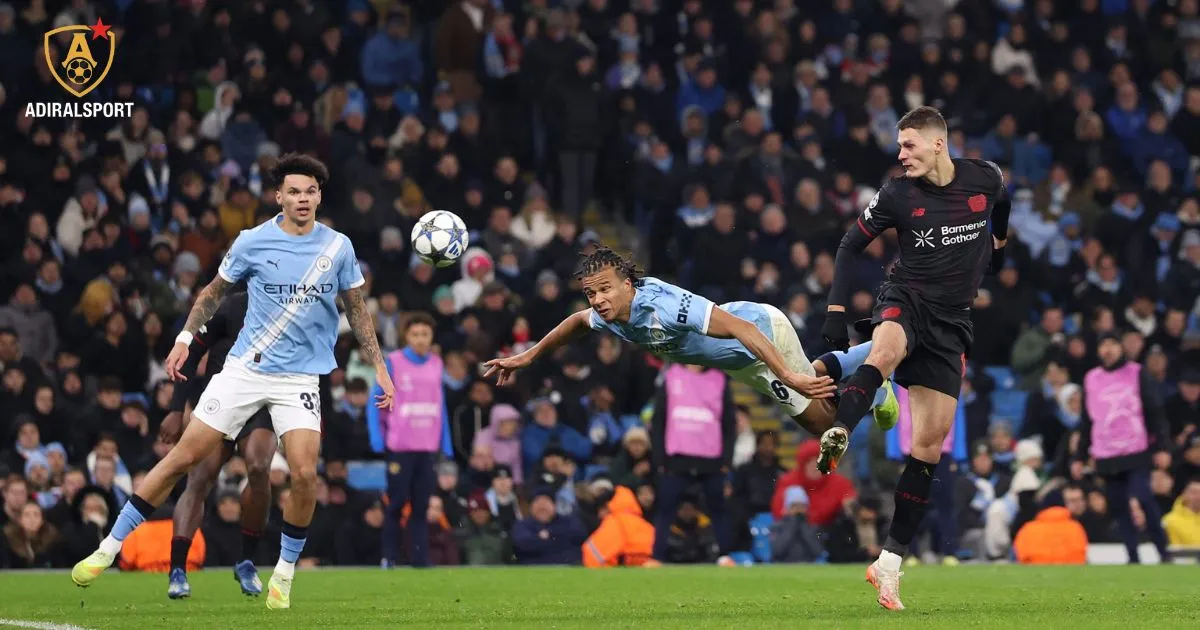
Man City vs Leverkusen Tactical Analysis
Table of Contents
Pep’s Century Spoiled: The Definitive Man City vs Leverkusen Tactical Analysis
Date: November 26, 2025
Comp: UEFA Champions League (Group Stage / League Phase)
Venue: Etihad Stadium, Manchester
Introduction: When the Script Goes Up in Flames
You know that specific feeling when you walk into the Etihad Stadium on a European night. The air is crisp, the anthem blares, and there is an overarching sense of inevitability. You expect the procession. You expect the suffocating possession map that tilts the pitch entirely into the final third. You expect Manchester City to win, especially when it is Pep Guardiola’s 100th Champions League game in charge of the club.
But last night, the script wasn’t just rewritten; it was shredded.
If you are reading this, you are likely still processing the 0-2 scoreline that flashed across the screens. It wasn’t a smash-and-grab. It wasn’t a lucky deflection or a refereeing error. It was a dismantling. As the rain fell on Manchester, Bayer Leverkusen didn’t just beat City; they out-thought them. For the first time this season, the Sky Blues looked mortal, confused, and disjointed.
In this deep dive, we aren’t just looking at the goals. We are peeling back the layers of the setup. This Man City vs Leverkusen Tactical Analysis will explain exactly how a rotated City side fell into a tactical trap that had been set weeks in advance, and why this result shakes the foundations of Group G.
1. Match Context: The Arrogance of Rotation?
Before we get into the Xs and Os, you have to understand the mindset going into kickoff. Manchester City sat comfortable in 4th place in the new League Phase format. Qualification for the knockouts was all but mathematically secured. Conversely, Bayer Leverkusen arrived desperate, languishing in 21st place, fighting for their European lives.
Did complacency creep in?
Guardiola made 10 changes to the side that lost to Newcastle at the weekend. You saw the team sheet and likely raised an eyebrow. No Erling Haaland. No Rúben Dias. No Joško Gvardiol. Instead, James Trafford was handed a surprise start in goal, and the midfield lacked its usual spine. This decision is the cornerstone of our Man City vs Leverkusen Tactical Analysis. By disrupting the “automata”—those subconscious connections between players—Pep stripped his side of its rhythm before a ball was even kicked.
2. Lineups and Formations: A Clash of Philosophies
To understand the chaos, you have to look at how the teams lined up. It wasn’t just about the names on the back of the shirts; it was about the spaces they were instructed to occupy.
Manchester City (4-1-4-1 / 3-2-5 Hybrid)
Guardiola opted for a technical, lightweight XI designed to keep the ball, but lacking physical imposition.
- Goalkeeper: James Trafford.
- Defenders: Rico Lewis (Inverted), John Stones (C), Abdukodir Khusanov, Rayan Aït-Nouri.
- Midfield: Nico González (Pivot), Tijjani Reijnders, Oscar Bobb.
- Forwards: Savinho, Omar Marmoush (False 9), Jeremy Doku.
The Tactical Intent: City wanted to overload the midfield with Lewis tucking in next to González, pushing Reijnders and Bobb into the “half-spaces” (the pockets between the wing and the center).
Bayer Leverkusen (5-2-3 / 3-4-3 Transition)
Leverkusen, sticking to the DNA implanted during the Alonso era, set up to absorb and spring.
- Goalkeeper: Mark Flekken.
- Defenders: Jarell Quansah, Loïc Badé, Jeanuel Belocian.
- Midfield: Alejandro Grimaldo (LWB), Aleix Garcia, Ibrahim Maza, Malik Tillman (RWB).
- Forwards: Kwadwo Poku, Patrik Schick, Kofane.
The Tactical Intent: A flat back five out of possession to deny width, snapping into a 3-4-3 the moment possession was won.
3. Man City vs Leverkusen Tactical Analysis: The Sterile Domination
The first half was a masterclass in deception. If you only looked at the possession stats, you would think City dominated. They held 55% of the ball and completed over 100 more passes than their German counterparts. But possession without penetration is arguably the most dangerous state for a Pep Guardiola team.
The False 9 Problem
Omar Marmoush is a fantastic talent, but he is not Haaland. In this Man City vs Leverkusen Tactical Analysis, we observed that Marmoush dropped deep to link play, which is fine in theory. However, with Rico Lewis and Nico González already clogging the central channels, Marmoush just added to the congestion.
There was no one pinning the Leverkusen center-backs. Jarell Quansah and Loïc Badé were able to step up and compress the space because they didn’t fear a runner in behind. City played right into Leverkusen’s hands—or rather, right into their block.
The “U-Shape” Passing Map
When you look at City’s passing network from the first 45 minutes, it forms a dreaded “U” shape. The ball went from Stones to Aït-Nouri, back to Stones, out to Lewis, and back again. Why? Because Leverkusen’s 5-2-3 mid-block cut off the passing lanes to Reijnders and Bobb.
Every time City tried to force a pass through the middle, Aleix Garcia or Ibrahim Maza was there to intercept. This forced City wide, where Savinho and Doku were constantly double-teamed by a wing-back and a wide center-back.
4. Leverkusen’s Defensive Masterclass: The 5-2-3 Block
You cannot talk about this result without praising the defensive structure of the visitors. This was not “parking the bus” in the traditional sense; it was an active, aggressive containment strategy.
The Trap on the Flanks
A crucial element of this Man City vs Leverkusen Tactical Analysis is recognizing the “pressing triggers.” Leverkusen allowed John Stones to carry the ball. They didn’t press him. But the moment the ball went wide to Aït-Nouri or Lewis, the trap snapped shut.
- The Mechanism: As soon as the ball reached the sideline, the Leverkusen wing-back (Grimaldo or Tillman) would press tight. Simultaneously, the near-side forward (Poku or Kofane) would curve their run to cut off the back-pass to the center-back.
- The Result: City’s players were isolated against the touchline with no passing options. They were forced to attempt high-risk dribbles or play blind passes into the middle—both of which led to turnovers.
Mark Flekken: The Wall
While the system was good, the execution required heroism. Mark Flekken made 7 saves, but his distribution was equally vital. By bypassing City’s first line of pressure with clipped balls to Schick, he effectively removed six City players from the game in a single action.
5. The Decisive Moments: Counter-Attacking Surgery
Possession is vanity; transition is sanity. That was the story of the night. Both goals came from moments where City lost the ball and failed to react to the “rest defense” transition.
Goal 1: The Switch (23’)
The opener was a thing of beauty and a nightmare for Rico Lewis.
- City lose the ball on the edge of the Leverkusen box.
- Aleix Garcia looks up immediately. He sees that Rico Lewis has inverted into midfield and is caught upfield.
- The space behind Lewis—the right-back zone—is empty.
- Alejandro Grimaldo, recognizing the trigger, sprints 60 yards into that vacuum.
- The ball is played long and diagonal. Stones drifts over but is too slow. Grimaldo takes one touch and rifles it past Trafford.
This highlights a key failure in the Man City vs Leverkusen Tactical Analysis: the vulnerability of the inverted full-back system against teams with rapid, wide outlets.
Goal 2: The Aerial Assault (54’)
If the first goal was speed, the second was simplicity.
- City are scrambling after a failed corner kick.
- Ibrahim Maza picks up the loose ball.
- Patrik Schick peels off the shoulder of the inexperienced Khusanov.
- The cross is inch-perfect; the header is clinical.
At 0-2, the Etihad fell silent. The psychological damage was done.
6. Impact of Substitutions: Too Little, Too Late
You could feel the panic on the City bench around the 60-minute mark. The “break glass in case of emergency” button was pressed.
- IN: Erling Haaland, Phil Foden, Rayan Cherki.
- OUT: Marmoush, Lewis, Bobb.
Did it change the Man City vs Leverkusen Tactical Analysis? Yes, but not enough.
The Shift to 3-1-6
With Haaland on the pitch, City moved to an ultra-aggressive 3-1-6 formation. They pinned Leverkusen into their own six-yard box. Haaland provided the focal point that was missing, occupying defenders and creating space for Foden to shoot from distance.
However, Leverkusen simply compacted their lines even further, dropping into a 6-3-1 at times. The “hero defending”—blocks by Quansah, tackles by Badé—became the theme. City generated 1.8 xG (Expected Goals) in the final 30 minutes alone but couldn’t find a way past Flekken.
7. Statistical Breakdown: The Illusion of Control / Man City vs Leverkusen Tactical Analysis
To fully grasp the nature of this defeat, you need to look at the cold, hard numbers. They tell a story of inefficiency versus ruthlessness.
| Statistic | Manchester City | Bayer Leverkusen |
| Goals | 0 | 2 |
| xG (Expected Goals) | 2.15 | 1.05 |
| Possession | 55% | 45% |
| Total Shots | 20 | 7 |
| Shots on Target | 7 | 2 |
| Passes Completed | 556 | 426 |
| Interceptions | 4 | 14 |
| Big Chances Missed | 3 | 0 |
Key Takeaway: Look at the interceptions. Leverkusen had 14 compared to City’s 4. This stat proves that Leverkusen was reading the game better, anticipating City’s passes, and disrupting the flow constantly. It is a damning stat for any Man City vs Leverkusen Tactical Analysis.
8. Timeline of the Match / Man City vs Leverkusen Tactical Analysis
For those who missed the live drama, here is how the night unfolded at the Etihad.
- 01’: ⏱️ KICKOFF: City starts with possession, the crowd is expectant.
- 12’: ⚠️ CHANCE: Savinho dribbles past two, but shoots straight at Flekken.
- 23’: ⚽ GOAL (Leverkusen): Alejandro Grimaldo finishes a counter-attack sparked by a long diagonal ball. 0-1.
- 40’: 🟨 YELLOW CARD: Rico Lewis booked for a frustration foul on Poku.
- HT: HALF TIME: Guardiola sprints down the tunnel. The tactical plan is failing.
- 46’: 🔄 SUB: Phil Foden replaces Rico Lewis. Stones moves to RB.
- 54’: ⚽ GOAL (Leverkusen): Patrik Schick rises highest to head in Maza’s cross. 0-2.
- 65’: 🔄 SUB: The Viking arrives. Erling Haaland replaces Marmoush.
- 72’: ❌ MISS: Haaland heads over from 6 yards out. A rare error.
- 85’: 🧤 SAVE: Flekken produces a world-class fingertip save to deny Cherki.
- 90+4’: 🏁 FULL TIME: Boos ring out (mostly at the performance, not the team). City 0-2 Leverkusen.
9. Player Ratings & Key Performances / Man City vs Leverkusen Tactical Analysis
Who stood up and who hid? In this section of our Man City vs Leverkusen Tactical Analysis, we rate the key protagonists.
Manchester City
- James Trafford (5/10): A difficult night. His positioning on Grimaldo’s goal was questionable, though he was left exposed.
- Nico González (6/10): Kept the ball ticking (92% pass accuracy) but offers zero defensive protection compared to Rodri.
- Savinho (7/10): The only City player who looked like he wanted to make something happen. Beat his man 4 times.
- Jeremy Doku (4/10): Completely nullified by the double-team of Tillman and Quansah.
Bayer Leverkusen
- Mark Flekken (9/10): Man of the Match. A historic goalkeeping performance.
- Alejandro Grimaldo (8/10): Even at his age, his reading of the game is elite. The goal was pure class.
- Jarell Quansah (8/10): The Liverpool academy graduate has found a home in Germany. A rock at the back.
- Ibrahim Maza (7.5/10): The creative hub. One assist and countless intelligent passes to relieve pressure.
10. The Pep vs. The System Battle
The most fascinating aspect of this Man City vs Leverkusen Tactical Analysis is the managerial battle. While Xabi Alonso may no longer be in the dugout, the system he built—the automated movements, the wing-back reliance, the box midfield—remains the blueprint.
Guardiola tried to be too clever. By playing Lewis and Stones in a complex rotation while also fielding new signings like Reijnders, he created a team of strangers. You could see players pointing at each other, unsure of who should track the runner.
Leverkusen, by contrast, looked like a hive mind. Everyone knew their job. When the ball went left, the whole team shifted left. When Schick dropped deep, Poku ran behind. It was cohesive. It was disciplined. It was German efficiency at its finest.
11. What This Means for Season 2025/2026
This result sends shockwaves through the competition.
- For City: They drop to 4th. They will likely still qualify for the top 8 automatically, but the aura of invincibility at home is gone. Teams now have a blueprint: sit deep, block the center, and explode into the spaces behind the inverted full-backs.
- For Leverkusen: This is a season-defining moment. Rising from 21st to the middle of the pack, they now have a genuine shot at the playoffs. The confidence gained from winning at the Etihad cannot be quantified.
Conclusion / Man City vs Leverkusen Tactical Analysis
As the dust settles on matchday 5 of the 2025/2026 Champions League, one thing is clear: Rotation is a dangerous game in elite football.
This Man City vs Leverkusen Tactical Analysis has shown that even the most expensive squads can be dismantled by superior organization and tactical discipline. Manchester City dominated the ball, but Bayer Leverkusen dominated the space. Guardiola’s 100th game will be remembered not for the celebration, but for the lesson taught by the visitors.
If you are a City fan, you worry about the lack of depth when Rodri or Dias aren’t there. If you are a neutral, you celebrate the fact that the Champions League remains unpredictable. The machine can be stopped. It just takes bravery, a 5-2-3 block, and a goalkeeper in the form of his life.
FAQ: Man City vs Leverkusen Tactical Analysis
Q1: What was the final score of the Man City vs Leverkusen match?
A: Bayer Leverkusen defeated Manchester City 2-0 at the Etihad Stadium on November 26, 2025.
Q2: Why did Pep Guardiola rotate his squad so heavily?
A: Following a draining defeat to Newcastle and with a congested winter schedule ahead, Guardiola chose to rest 10 key players, a decision that heavily influenced the outcome of this Man City vs Leverkusen Tactical Analysis.
Q3: Who scored the goals for Leverkusen?
A: Alejandro Grimaldo opened the scoring in the 23rd minute, and Patrik Schick doubled the lead with a header in the 54th minute.
Q4: What was the key tactical factor in Leverkusen’s win?
A: As detailed in our Man City vs Leverkusen Tactical Analysis, the key was Leverkusen’s compact 5-2-3 defensive block which neutralized City’s central play and forced them into harmless wide areas.
Q5: How did Erling Haaland perform?
A: Haaland came off the bench in the 65th minute. He had a few chances and hit the target, but the Leverkusen defense was already settled and difficult to break down.
Q6: Where can I read more Man City vs Leverkusen Tactical Analysis?
A: You can find further breakdowns, including player heatmaps and xG charts, right here on our blog. Subscribe to our newsletter for weekly updates.
Q7: Did City deserve to lose based on the stats?
A: While City had higher xG and possession, the quality of Leverkusen’s chances and their defensive resilience meant the result was a fair reflection of the tactical battle.
What’s Next?
Do you want to see how this result impacts the coefficient rankings, or would you like a detailed scout report on the Man of the Match, Mark Flekken? Let me know in the comments below!