
Man City vs Dortmund Tactical Analysis
Table of Contents
Foden’s Masterclass: A 4-1 Man City vs Dortmund Tactical Analysis (2025/2026)
✍️ Author’s Opening: The Roar, The Chessboard, and The Silence
You feel it, don’t you? That electric buzz right before a huge Champions League night. It’s not just a game; it’s a spectacle. It’s that knot that tightens in your stomach, the explosion of noise when the net bulges, and that quiet, knowing nod you give when a player does something so incredibly smart it feels like they’re playing chess while everyone else is stuck on checkers.
That feeling—that deep appreciation for the why behind the what—is what last night’s clash at the Etihad was all about. As a fan, you were probably on the edge of your seat. As an analyst, you’re hungry for the details.
If you’re reading this, you know the 4-1 scoreline doesn’t tell the whole story. It’s just the headline. You want the real story. You’re here for the tactical deep dive, the raw data, and the moments that truly defined the match. You’ve come to the right place. This is the Man City vs Dortmund tactical analysis you need to understand what really happened on that pitch.
Match Context: The 4-1 Result & Key Statistics
Before we pull apart the X’s and O’s, you need the hard facts. This is the foundation upon which we build our entire analysis. The game, played under the bright lights of the Etihad on November 5, 2025, was a Champions League group stage match that felt more like a knockout tie.
The Story of the Game: Final Score & Match Timeline
The flow of a match tells you more than just the goals. It tells you about shifts in momentum, periods of dominance, and moments of resilience. Here is the minute-by-minute story of the game.
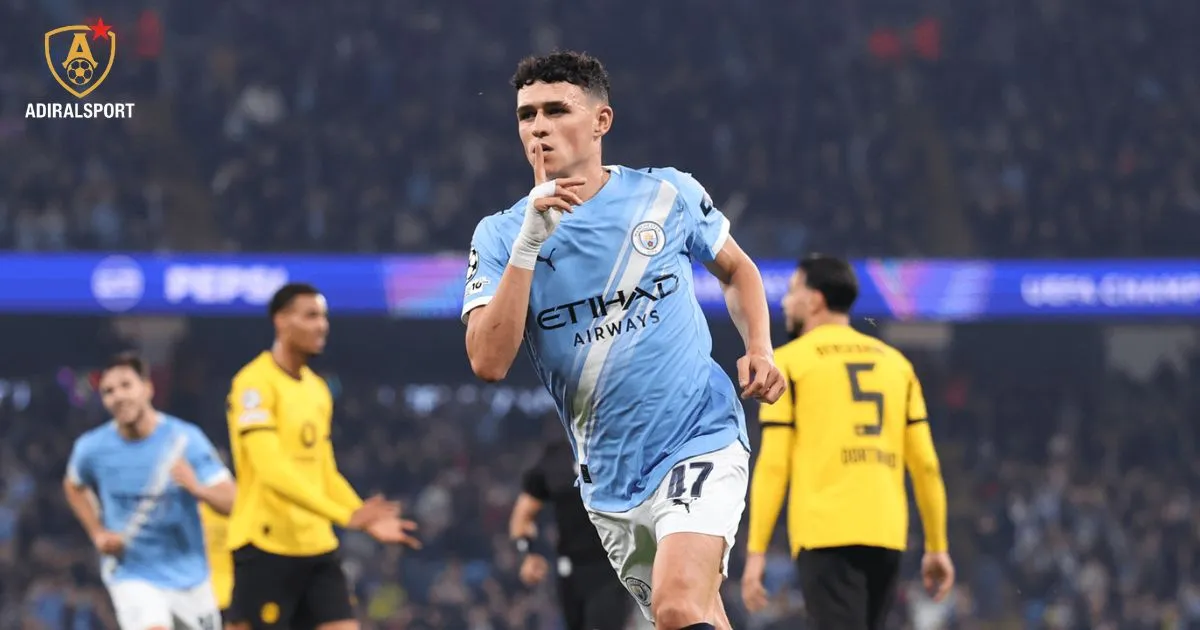
- 22′ – GOAL (Man City 1-0): The deadlock breaks. Phil Foden, finding a pocket of space just outside the box, receives the ball, takes a touch, and curls a breathtaking shot past a sprawling Gregor Kobel.
- 29′ – GOAL (Man City 2-0): A lightning-fast response. City double their lead. Jérémy Doku isolates his man, beats him with pure pace, and delivers a perfect cutback for Erling Haaland, who makes no mistake.
- 57′ – GOAL (Man City 3-0): Foden again. This time, it’s a piece of individual brilliance. He weaves through two defenders and unleashes a powerful strike.
- 72′ – GOAL (Dortmund 3-1): A flicker of hope. Dortmund pull one back. A well-worked set-piece finds Julian Ryerson, whose cross is met powerfully by the head of Waldemar Anton.
- 90’+1′ – GOAL (Man City 4-1): The substitute seals it. Rayan Cherki, on for the last 10 minutes, finds himself in space and coolly slots home to put the final stamp on the game.
The Starting Lineups: Setting the Tactical Board
Before a single ball is kicked, the game begins. It starts on the tactics board, and the team sheets you see below are the first public declaration of intent from both Pep Guardiola and Niko Kovač.
When you look at these lineups, you can already start to see the battles that will shape the match.
| Manchester City (4-2-3-1) | Borussia Dortmund (5-2-3) |
| G. Donnarumma (GK) | G. Kobel (GK) |
| M. Nunes | J. Ryerson |
| J. Stones | W. Anton |
| J. Gvardiol | N. Schlotterbeck |
| N. O’Reilly | R. Bensebaini |
| Nico González | D. Svensson |
| T. Reijnders | M. Sabitzer |
| Savinho | F. Nmecha |
| P. Foden (MOTM) | K. Adeyemi |
| J. Doku | M. Beier |
| E. Haaland | S. Guirassy |
| Subs: Cherki, Bernardo, Dias, Marmoush, Ait-Nouri | Subs: Can, Gross, Chukwuemeka, Bellingham, Silva |
On paper, you see City’s aggressive 4-2-3-1. But as you know, with Pep, a formation is just a suggestion. The key? Foden listed as the central attacking midfielder. For Dortmund, Kovač’s 5-2-3 (or 3-4-3 in attack) screams caution, defensive solidity, and a plan to strike on the counter.
Full Match Statistics: The Data Behind the Drama
Now, I want you to look very, very closely at this table. Read the numbers. One of them is going to leap off the screen and challenge everything you thought you knew about this match. It’s the most important clue in our Man City vs Dortmund tactical analysis.
| Statistic | Manchester City | Borussia Dortmund |
| Possession % | 49.9% | 50.1% |
| Total Shots | 18 | 12 |
| Shots on Target | 11 | 4 |
| Pass Accuracy | 87% | 88% |
| Corners | 7 | 3 |
| Fouls Committed | 9 | 14 |
| Data sourced from official match reports. |
Did you see it?
Possession: 49.9% for City, 50.1% for Dortmund.
Let that sink in for a second. A Pep Guardiola team. At the Etihad. Won 4-1. And lost the possession battle.
If that doesn’t immediately tell you that this was a different kind of City performance, nothing will. This singular statistic is the key that unlocks the entire tactical story. Forget the old narratives of “death by a thousand passes.” This was something new. Something more direct. Something, perhaps, even more terrifying.
Guardiola’s Masterplan: A Man City Tactical Analysis
This was not a typical City performance, and that’s what makes this Man City vs Dortmund tactical analysis so fascinating. Guardiola, the high priest of positional play, effectively laid a trap. He allowed Dortmund to have the ball in non-threatening areas, knowing that his team’s quality in transition would be the deciding factor.
The Foden Factor: Player of the Match Analysis
Let’s be clear: this was The Phil Foden Show.
You saw him listed as a No. 10, but that’s almost an insult to what he actually did. He wasn’t a static point; he was a free-roaming, interspatial interpreter. He was the system’s brain, and Dortmund’s midfield duo of Felix Nmecha and Marcel Sabitzer must be seeing his shadow in their sleep.
Foden’s genius in this match, and a cornerstone of this Man City vs Dortmund tactical analysis, was his refusal to be marked.
- Intelligent Movement: Foden lived in the “half-spaces,” that ghost-like zone between Dortmund’s right center-back (Anton) and their right wing-back (Ryerson). He was never close enough for one to mark him without abandoning their post.
- Positional Gravity: By floating, he created tactical dilemmas. If Sabitzer pushed up to engage him, he left space behind for Nico González or Reijnders to exploit. If he dropped off, Foden had time to turn and pick a pass.
- The Data: His two goals were the headline, but his match-high 13.2km covered tells the real story. That isn’t just mindless running; it’s a calculated, constant hunt for the next pocket of space. His 93% pass accuracy in the final third was simply devastating. You cannot complete a Man City vs Dortmund tactical analysis of this game without centering it on Foden’s masterclass.
Direct Doku & Dynamic Savinho: Winning the Wings
If Foden was the clinical brain, Jérémy Doku and Savinho were the devastatingly sharp switchblades on either flank.
For years, you’ve been conditioned to watch City’s wingers (like Mahrez or Grealish) hold the width, receive the ball, and patiently recycle possession.
Not these two. Not on this night.
Their instructions were clearly different, and this is a critical observation for our Man City vs Dortmund tactical analysis. Their job was to get the ball, face their defender, and attack.
The second goal, finished by Haaland, was a prime example. Doku received the ball wide. In the “old” City system, he might have cut back and passed to a midfielder. Here, he took one look at Ryerson, engaged the 1v1, and exploded past him to the byline. That single action—pure, direct, vertical pace—created the goal. This directness is precisely why City didn’t need 70% possession. They didn’t want to strangle Dortmund; they wanted to punch them on the counter.
Kovač’s Conundrum: A Dortmund Tactical Analysis
Now, you have to give credit where it’s due. This 4-1 scoreline feels harsh on Dortmund, especially when you re-watch the opening exchanges. Niko Kovač is a smart manager, and he came in with a clear, brave plan.
The Bright First 15: What Dortmund Did Right
For the first 15, maybe even 20 minutes, Kovač’s plan was working. You saw it. Dortmund looked like the home team.
- The High Press: Their 5-2-3 shape was aggressive without the ball. The front three of Adeyemi, Beier, and Guirassy pressed City’s backline, while Nmecha and Sabitzer snapped at the heels of City’s pivot.
- Confidence on the Ball: They weren’t afraid to play. As the 50.1% possession stat proves, they passed the ball, looked comfortable, and tried to build attacks.
- Compact Shape: They were compact, difficult to break down, and forced City into uncharacteristic long balls.
If you were to do a Man City vs Dortmund tactical analysis of only those first 20 minutes, you’d probably write a very different article. They were matching the champions, blow for blow.
Where It Unraveled: The Price of a Single Mistake
So, what happened? The answer is simple and brutal: elite-level punishment.
Against this Manchester City side, you cannot have a single lapse in concentration. Foden’s first goal in the 22nd minute wasn’t the result of a long, sustained siege. It was the result of one moment.
One moment where Nmecha was half-a-second-late to track the run. One moment where Schlotterbeck was pulled just wide enough by Haaland. In that one second, Foden found the space, and the game changed.
After that goal, you could visually see the confidence drain from Dortmund. Their press became a half-press. Their transitions, once sharp, became hesitant. They were caught in two minds: “Do we stick to the brave high press that just got us punished, or do we drop off?” This hesitation is poison at the elite level. This Man City vs Dortmund tactical analysis is, in many ways, a story of how a single moment of genius can dismantle an entire game plan.
Key Battles That Defined This Man City vs Dortmund Tactical Analysis
Football is a game of 11v11, but it’s often decided by a few crucial individual duels. When you’re breaking down the tape, these three battles tell the entire story of this Man City vs Dortmund tactical analysis.
- Foden vs. Dortmund’s Pivot (Nmecha/Sabitzer)This wasn’t even a fair fight; it was a tactical knockout. As we’ve covered, Foden’s movement made him a ghost. He was never one man’s responsibility, which meant he became everyone’s problem. He was the question Dortmund’s midfield simply could not answer.
- Haaland vs. Anton/SchlotterbeckYou might look at the scoresheet and see “only” one goal for Erling Haaland. If you do, you’re missing the point. Haaland’s tactical contribution was immense. His job in this match wasn’t just to score; it was to be a human battering ram. He occupied all three of Dortmund’s center-backs (Anton, Schlotterbeck, Bensebaini). His sheer physical presence and the constant threat of his runs in behind is what created the Foden-sized black holes all over the pitch. This is a key finding in this Man City vs Dortmund tactical analysis.
- Guardiola vs. The Possession MythThis is the big one. This was the battle of ideologies, and Guardiola won it by… adopting his opponent’s (perceived) strength? Pep, the ultimate possession-based manager, just beat a top German side 4-1 while conceding possession. This is the ultimate tactical flex. This match is the final, definitive proof for any Man City vs Dortmund tactical analysis that City have evolved. They are no longer a one-trick pony. They are a multi-faceted monster, capable of winning any kind of game.
Conclusion: What This 4-1 Win Means for the 2025/2026 Season
So, what do you take away from all this? When you close this tab, what’s the one thing you should remember?
This 4-1 match was a seismic warning shot to the rest of Europe. This Man City vs Dortmund tactical analysis isn’t just a recap of a single game; it’s a preview of what’s to come.
Manchester City are no longer just a positional team; they are a deadly transitional one. They are direct. They are fast. And with Phil Foden in this kind of form, conducting the orchestra from a central role, they might just be unstoppable. They don’t need the ball to dominate you.
For Niko Kovač and Dortmund? It’s a harsh, humbling lesson. You’re back to the drawing board. You learned that you can’t just be good for 15 minutes. This Man City vs Dortmund tactical analysis shows, in brutal fashion, the razor-thin margin between a very good team and an elite, history-making one.
FAQ: Your Questions on the Man City vs Dortmund Tactical Analysis
You’ve got questions, and we’ve got answers. Here’s a rapid-fire breakdown of the most common queries we see about this Man City vs Dortmund tactical analysis.
What was the main tactical takeaway from this Man City vs Dortmund tactical analysis?
The single biggest takeaway is Manchester City’s terrifying new adaptability. You’ve been trained to expect 70% possession from them. They won this game 4-1 with only 49.9%, using Phil Foden’s brilliance as a central “No. 10” and deploying devastatingly direct wing play from Doku and Savinho.
How did Erling Haaland’s role feature in this Man City vs Dortmund tactical analysis?
While Foden was the star, Haaland’s role was just as important. He scored one goal, but his primary tactical function was to occupy all three of Dortmund’s central defenders. His size, power, and movement created a “gravitational pull” that opened up the exact pockets of space for Foden to exploit.
Why did Dortmund’s possession not lead to a better result in this Man City vs Dortmund tactical analysis?
This is a great question. This Man City vs Dortmund tactical analysis shows that not all possession is created equal. Dortmund’s 50.1% possession was often in non-threatening areas (their own half or deep in midfield). City were happy to let them have it there. The proof is in the “Shots on Target” stat: City had 11, while Dortmund had only 4. Dortmund had the ball, but City had the penetration.
Who was the official Player of the Match in this Man City vs Dortmund tactical analysis?
The official UEFA Player of the Match was Phil Foden, and it wasn’t even close. Our Man City vs Dortmund tactical analysis fully agrees. His two goals, his constant intelligent movement, and his 13.2km covered made him the decisive factor on the pitch.
What does this Man City vs Dortmund tactical analysis tell us about the 2025/2026 season?
It tells us that Manchester City remain the team to beat, and they’ve added another weapon to their arsenal: they can now win without dominating the ball. For Dortmund, it’s a reality check that they are a strong team but must eliminate individual errors to compete with the absolute elite.
What’s Your Take?
But that’s just my breakdown. Football is a game of opinions, and the best analysis comes from discussion.
What did you see? Did you spot something in Dortmund’s press that I missed? Do you think this new, direct City is more dangerous?
Drop your take in the comments below. Let’s debate this Man City vs Dortmund tactical analysis and break down what really happened on the pitch.