
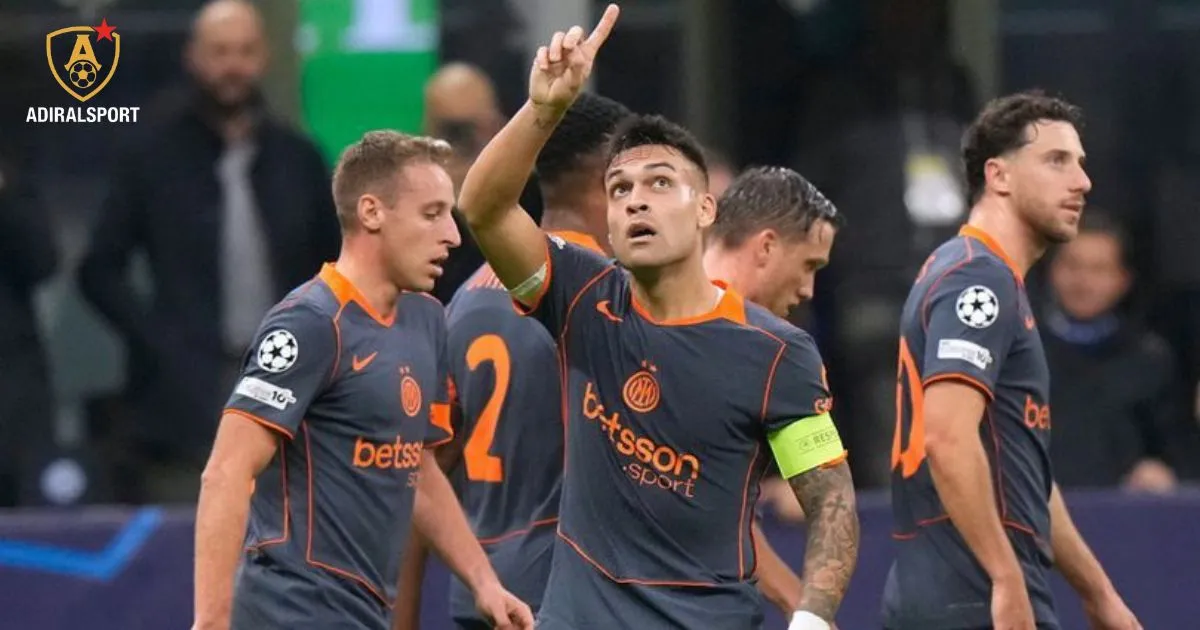
Inter vs Kairat Almaty Tactical Analysis
Table of Contents
Inter vs Kairat Almaty Tactical Analysis: How Chivu’s Inter Scraped a 2-1 Win and Kairat’s Shock Goal
We all felt it, didn’t we?
If you were in the San Siro on Wednesday, November 5th, 2025, or watching from home, you understand. It was that creeping, uncomfortable knot in your stomach. When Ofri Arad’s header hit the back of Yann Sommer’s net in the 55th minute, it wasn’t just a goal. It was the sound of perfection shattering. It was the end of Inter’s perfect, impenetrable, almost mythical defensive record in Europe for the 2025/2026 season. For a brief, cold moment, the celebratory roar of the 70,000-plus, so sure of a routine victory, fell completely silent.
You came expecting a procession. You came expecting Inter, the dominant force of this Champions League league phase, to simply roll over the Kazakh debutants. We all did. But this is the Champions League. It doesn’t do “routine.” What we got was a gritty, nerve-shredding 2-1 fight that tested every bit of Cristian Chivu’s tactical setup and his players’ character.
This wasn’t just a match; it was a character test. It was a statistical anomaly wrapped in a human drama. And as you and I break down the Inter vs Kairat Almaty Tactical Analysis for the 2025/2026 season, you’ll find the real story. It wasn’t in the 65% possession or the 24 shots. The real story was in the moments of resilience, the sudden, unexpected vulnerability, and the tactical adjustments that ultimately secured the three points. This is the story of how Inter won the match, but Kairat Almaty won a different kind of victory.
Match Context: The Champions League David vs. Goliath at San Siro
To truly grasp the tension of this 2-1 result, you have to understand the narrative heading into Round 4. This wasn’t just another group-stage game; it was a classic David vs. Goliath story, magnified by the unforgiving lights of the new Champions League league phase.
- Fixture: UEFA Champions League 2025/2026 – League Phase, Round 4
- Date: 05 November 2025
- Venue: Stadio Giuseppe Meazza, Milan
On one side, you had Cristian Chivu’s Inter. They were, without a doubt, the talk of Europe. Three matches played. Three wins. Zero goals conceded. They had navigated a tricky start to the campaign with a terrifying efficiency. Chivu, in his first full season as the senior manager, had his team playing a brand of football that was both beautiful and brutal. They were on a perfect nine points, and the match against Kairat was seen as a simple stepping stone, a chance to rotate, and a virtual lock for the knockout stages.
On the other side, you had Rafael Urazbakhtin’s Kairat Almaty. They were the romantic story, the debutants from Kazakhstan who had defied all odds to even reach this stage. Their journey was a fairytale, but the league phase had been a harsh dose of reality. Three matches played. Three losses. They were searching for their first points, their first goal in the competition’s main phase. For them, a trip to the San Siro wasn’t a game; it was an event, a final.
The expectation from every pundit, every fan, and likely every bookmaker was a comfortable Inter victory. A 3-0, maybe a 4-0. The narrative was set. But as we all know, the ball is round, and the 90 minutes in Milan were about to challenge that script in the most dramatic way possible. This specific setup is what makes the resulting Inter vs Kairat Almaty Tactical Analysis so fascinating.
The Tactical Battle Lines: Chivu’s 3-5-2 vs. Urazbakhtin’s 4-2-3-1
When the team sheets were released an hour before kickoff, the tactical philosophies were laid bare. There were no surprises, but the stark contrast in approach defined the entire match. This was a classic duel of possession versus pragmatism, attack versus absorption.
Cristian Chivu’s Inter: The 3-5-2 Fluidity
You know Chivu’s system by now. It’s the 3-5-2 that has become Inter’s trademark, but he’s added his own aggressive, vertical twist.
- The System: On paper, it’s a 3-5-2. In reality, it’s a hyper-fluid 3-1-4-2 or even a 2-4-4 in attack. The entire philosophy is built on high-tempo, vertical passes, and dominating the wide areas.
- The Engine: The plan was clear: use the wing-backs, Denzel Dumfries and Federico Dimarco, as de facto wingers. Their job was to pin Kairat’s full-backs deep, creating space inside.
- The Midfield Trio: You had the muscle and late runs of Nicolò Barella and Davide Frattesi, with Piotr Zieliński acting as the deep-lying creator (with Çalhanoğlu rested… at first). Their rotational movement was designed to pull Kairat’s midfield block apart.
- The Front Two: Chivu made a key selection, starting 20-year-old Francesco Pio Esposito alongside the captain, Lautaro Martínez. This gave Inter a mix of brute force (Esposito) and predatory instinct (Lautaro). The plan was to pin Kairat’s two center-backs and create chaos.
Rafael Urazbakhtin’s Kairat: The 4-2-3-1 Deep Block
What do you do when you’re the underdog at the San Siro? You dig in. Urazbakhtin’s choice of a 4-2-3-1 was the only logical one.
- The System: This wasn’t a 4-2-3-1 designed to press high. This was a 4-2-3-1 that, without the ball (which they knew would be 65-70% of the time), became a compact 4-5-1 or even a 6-3-1.
- The Double-Pivot: The two holding midfielders, captain Ofri Arad and Damir Kasabulat, were the lynchpins. Their only job was to sit in front of their back four and prevent any passes from getting to Lautaro or Esposito’s feet. They were there to clog the center.
- The Out-Ball: Kairat’s strategy was simple: absorb, absorb, absorb. Frustrate Inter, force them into bad shots, and then—if they won the ball—hit a long, hopeful pass to the lone striker, Dastan Satpaev. The wingers, Jorginho and Aleksandr Mrynskiy, were tasked with the exhausting job of tracking Inter’s wing-backs all the way to their own corner flag.
This was the strategic setup. Now, let’s look at the personnel who had to execute these plans.
Official Starting Lineups
The teams that stepped onto the pitch were the engines for this tactical battle. The decision to play Carlos Augusto as a left-centre-back would, as you’ll see, become the defining move of the match.
Table 1: Inter vs Kairat Almaty Starting Formations
| Position | Inter (3-5-2) | Kairat Almaty (4-2-3-1) |
| Coach | Cristian Chivu | Rafael Urazbakhtin |
| GK | 1. Yann Sommer | 77. Temirlan Anarbekov |
| DEF | 31. Yann Bisseck | 26. Edmilson |
| DEF | 6. Stefan de Vrij | 80. Egor Sorokin |
| DEF | 30. Carlos Augusto | 25. Aleksandr Shirobokov |
| MID | 2. Denzel Dumfries | 3. Luís Mata |
| MID | 16. Davide Frattesi | 15. Ofri Arad (C) |
| MID | 23. Nicolò Barella | 4. Damir Kasabulat |
| MID | 7. Piotr Zieliński | 55. Valeriy Gromyko |
| MID | 32. Federico Dimarco | 7. Jorginho |
| FWD | 94. Francesco Pio Esposito | 24. Aleksandr Mrynskiy |
| FWD | 10. Lautaro Martínez (C) | 9. Dastan Satpaev |
Full Match Timeline and Key Events: A Story in Three Acts
If you boil the game down to its key moments, you see a clear narrative: Inter’s dominance, Kairat’s shock, and Inter’s desperate response. This chronological Inter vs Kairat Almaty Tactical Analysis shows exactly how the 2-1 result unfolded.
Act I: The Siege and the Inevitable (0’ – 45’)
From the first whistle, the game looked exactly as you expected. Inter, roared on by the home crowd, laid siege to the Kairat goal. The ball was almost exclusively in Kairat’s half.
- 10′ – The First Big Chance: You saw the pattern immediately. Ball wide to Dimarco. His angled, whipping drive was fierce, forcing Kairat’s keeper, Temirlan Anarbekov, into his first big save. The rebound fell to Lautaro, but his snapshot was desperately cleared off the line by Egor Sorokin. You felt a goal was a matter of when, not if.
- 10′ – 37′ – Frustration: For the next 27 minutes, you watched Inter huff and puff. The 4-5-1 block was working. Dumfries and Dimarco were getting the ball but were met by a wall of two defenders. Barella and Frattesi were making runs, but Arad and Kasabulat were tracking them step for step. The San Siro grew a little quieter, a little more impatient.
- 38′ – The Warning Shot: And then, the reminder. Against the complete run of play, Kairat’s only real target, Dastan Satpaev, found a pocket of space. He let fly from 30 yards. It was a speculative shot, but it took a wicked deflection off Stefan de Vrij and, to the horror of the stadium, looped over a stranded Sommer and clipped the top of the crossbar. It was a collective gasp. A wake-up call.
- 45′ – GOAL (Inter 1-0 Kairat): The warning worked. Inter, perhaps realizing they couldn’t just walk the ball in, turned up the pressure. Just as the fourth official’s board was being prepared, the breakthrough came. After a frantic scramble in the box from a corner, the ball fell to the one man you’d want it to: Lautaro Martínez. It wasn’t pretty. He scrambled it home at the near post, a pure poacher’s goal. It was scrappy, but it was vital.
Halftime: 1-0. The Inter vs Kairat Almaty Tactical Analysis at the break would have been simple: “Job half-done. Inter dominant, Kairat plucky. More of the same and the floodgates will open.”
Oh, how wrong that was.
Act II: The Shock and the Silence (46’ – 66’)
Chivu made a change, bringing on Ange-Yoan Bonny for Lautaro, who had taken a knock. Kairat also swapped Gromyko for Erkin Tapalov. The second half began… and then, the unthinkable.
- 55′ – GOAL (Inter 1-1 Kairat): Kairat won a corner. Their third of the game. You probably weren’t even paying full attention. The ball was whipped in. It wasn’t a great delivery. It hit an Inter defender, then a Kairat player. It was, as the post-match reports called it, a “bout of pinball” inside the six-yard box. And in the middle of the chaos, the man who was meant to be preventing goals, Kairat’s captain and holding midfielder Ofri Arad, reacted quickest. He lunged forward, nodding the loose ball past Sommer from two yards out.
- 55′ – 66′ – The Panic: You could feel the air leave the stadium. Silence. Then, whistles. Kairat had scored. Inter’s perfect defensive record was gone, erased by a scrappy corner and a defensive lapse. For the next ten minutes, Inter were rattled. Passes went astray. Frantic shots flew high and wide. Kairat, suddenly emboldened, were winning tackles. The “easy win” had just turned into a potential nightmare.
Act III: The Response and the Relief (67’ – 90’)
This was the test of Chivu’s Inter. How do you respond? The answer, it turned out, came from the most unlikely of sources.
- 67′ – GOAL (Inter 2-1 Kairat): The tactical tweak paid off. Carlos Augusto, who you’ll remember was playing as a left-centre-back, did what Chivu’s system encourages. He saw the space open up as Kairat’s tired midfield failed to track him. He bombed forward, stepping into the void. Pio Esposito, showing strength and awareness beyond his years, held the ball up brilliantly and laid it off. From the edge of the box, Augusto didn’t hesitate. He unleashed a thumping, low drive that rocketed into the bottom corner. Anarbekov didn’t even move. It was a defender’s goal with a striker’s precision. The stadium erupted. It was pure relief.
- 71′ – The “Game Management” Subs: Chivu immediately went to his bench to lock it down. Off came the young assist-maker Pio Esposito for the experienced Marcus Thuram, who could hold the ball in the corner. Off came the all-action (but tiring) Barella for the calm, metronomic Hakan Çalhanoğlu. The message was clear: “We have the lead. We do not lose it.”
- 71′ – 90′ – Closing it Out: The last 20 minutes were a professional, if tense, exercise in game management. Çalhanoğlu put his foot on the ball, Inter kept possession, and Kairat, having given their all, simply ran out of steam.
Full Time: 2-1. A win is a win. But the final whistle was met with applause of relief, not celebration. This Inter vs Kairat Almaty Tactical Analysis shows it was far from simple, and the statistics tell an even stranger story.
Deep Dive Statistics: The Story the Numbers Tell
If you only looked at the scoreline (2-1), you’d think this was a close game. If you only looked at the stats, you’d think Inter won 5-0. The truth, as it so often does, lies somewhere in between. The data is a core part of this Inter vs Kairat Almaty Tactical Analysis, and it highlights the sheer absurdity of the match.
Table 2: Inter vs Kairat Almaty Full Match Statistics (Source: UEFA)
| Statistic | Inter | Kairat Almaty |
| Possession | 65% | 35% |
| Total Shots | 24 | 7 |
| Shots on Target | 9 | 3 |
| Saves | 2 | 7 |
| Expected Goals (xG) | 1.99 | 0.15 |
| Passes Completed | 515 / 590 (87%) | 231 / 310 (75%) |
| Corners | 9 | 3 |
| Fouls Committed | 9 | 16 |
| Distance Covered | 115.2 km | 117.1 km |
Dissecting the Data: What You Need to See
- Possession (65% vs 35%): This is no surprise. This reflects the “siege” we talked about. Inter had the ball, but for long stretches, it was sterile possession, passing it back and forth in front of Kairat’s 10-man wall.
- Shots (24 vs 7): This is the story of Inter’s dominance and, frankly, their wastefulness. 24 shots should equal more than two goals. Kairat’s 7 shots were mostly hopeful punts, apart from the crossbar clip and the goal.
- Expected Goals (xG) (1.99 vs 0.15): This is the killer stat of the entire Inter vs Kairat Almaty Tactical Analysis. This number means, based on the quality of chances created, Inter should have scored 1.99 goals (so, 2). They hit their average. But look at Kairat. Their 7 shots were of such low quality that they only generated 0.15 xG. This tells you their goal was a statistical impossibility. A one-in-a-hundred chance, a chaotic “pinball” moment that had almost no right to go in. They massively, massively overperformed their xG.
- Saves (7 vs 2): If xG tells one side of the story, this tells the other. Kairat’s keeper, Temirlan Anarbekov, made 7 saves. He was the only reason this wasn’t 4-1 at halftime. He was, by any measure, Kairat’s Man of the Match.
- Fouls (9 vs 16) & Distance Covered (115.2km vs 117.1km): Look at these two together. Kairat committed almost double the fouls and ran 1.9km more than Inter. This is the statistical footprint of an underdog giving everything. They were more aggressive, more disruptive, and worked harder off the ball. It was the only way they could compete.
Key Tactical Takeaways from the 2-1 Win
Now we get to the core of the Inter vs Kairat Almaty Tactical Analysis. The stats are the “what”; this is the “why.” Why did Inter struggle? How did Kairat score? And how did Inter really win?
1. Kairat’s 4-2-3-1 Deep Block: A Masterclass in Frustration
You have to give credit where it’s due. Rafael Urazbakhtin’s game plan was almost perfect. He knew Kairat couldn’t outplay Inter, so he aimed to out-suffer them.
Kairat’s 4-2-3-1 was a masterpiece of congestion. The double-pivot of Ofri Arad and Damir Kasabulat was the key. They didn’t just sit; they created a “cage” in the most valuable piece of real estate on the pitch—the “Zone 14” area just outside the penalty box. Their entire job was to screen passes into Lautaro and Esposito. You saw Barella and Zieliński repeatedly get the ball 30 yards out, look up, and see a wall of white shirts.
This tactic successfully forced Inter wide, but that’s where part two of the plan kicked in. Kairat’s wingers, Jorginho and Mrynskiy, were not wingers; they were auxiliary full-backs. You’d see Dumfries get the ball, and he’d instantly be double-teamed by Luís Mata (the LB) and Jorginho (the LW). The same happened to Dimarco on the other side. By clogging the middle and doubling up on the flanks, Kairat effectively sealed off every easy route to the goal. Their 16 fouls weren’t just cynical; they were tactical, breaking up any rhythm Inter tried to build. This part of the Inter vs Kairat Almaty Tactical Analysis must praise Kairat’s discipline.
2. The Carlos Augusto Goal: The “Chivu Special” and Systemic Victory
For 67 minutes, Kairat’s block had held. So, how did Inter beat it? Not with a delicate piece of skill. Not with a 30-pass move. They beat it with a systemic thunderbolt.
This is the “Chivu-ball” you hear about. In a traditional back three, the centre-backs defend. In Chivu’s 3-5-2, the wide centre-backs are auxiliary attackers. This is a core tenet of the Inter vs Kairat Almaty Tactical Analysis. With Dimarco playing high and wide, dragging Kairat’s right-back and right-winger with him, a massive channel opened up. Carlos Augusto, the left-centre-back, saw it.
He wasn’t tracked. Why would he be? Kairat’s midfield was busy with Frattesi and Zieliński. Their defense was occupied by Bonny and the high wing-backs. Augusto, from a defensive position, sprinted 40 yards into an attacking one. Pio Esposito’s hold-up play was vital, but the goal belongs to the system. It was a centre-back, 18 yards from goal, striking the ball like a seasoned forward. This wasn’t a lucky goal; it was the antidote to the deep block. If you clog the middle, Inter will find a new attacker. In this case, it was a defender.
3. Player Focus: Anarbekov’s Wall and Inter’s Set-Piece Nightmare
This Inter vs Kairat Almaty Tactical Analysis would be incomplete without focusing on two key elements that defined the scoreline.
First, Temirlan Anarbekov. The 22-year-old Kairat goalkeeper played the game of his life. The 7 saves in the stats don’t do it justice. You remember the 10th-minute stop from Dimarco. You remember the point-blank save on a Frattesi header in the 32nd minute. You remember the sprawling stop to deny Bonny in the 60th. He was the reason a 1.99 xG game was 1-1. He was the “Great Wall of Almaty.”
Second, Inter’s set-piece defending. This is the warning sign, the red flag in this Inter vs Kairat Almaty Tactical Analysis. The goal they conceded was, in a word, shambolic. It was the 0.15 xG chance. It wasn’t a great delivery. It wasn’t a brilliant header. It was a breakdown of concentration. You could see Bisseck, De Vrij, and Augusto all get in each other’s way. The ball bounced free, and Arad, a midfielder, wanted it more than Inter’s towering defenders. Was it a zonal marking failure? Was it individual error? It was chaos. And it proved that Inter’s perfect defensive record was, perhaps, a little fragile. You can be sure every future opponent’s analyst just clipped that 55th-minute corner.
4. Chivu’s Substitutions: Controlling the Chaos
A manager earns his pay when the plan fails. Chivu’s initial plan was working statistically but failing on the scoreboard. His reaction was critical, and this part of the Inter vs Kairat Almaty Tactical Analysis shows he passed the test.
After the Augusto goal made it 2-1, the game was on a knife’s edge. Kairat would be pushing for another “lucky” goal, and Inter’s players were still nervy. Chivu’s double-sub at 71 minutes was a tactical masterstroke.
- Çalhanoğlu ON, Barella OFF: Barella had run himself into the ground. He was all-action, but in that moment, Inter didn’t need action; they needed calm. Hakan Çalhanoğlu is one of the best “controllers” in Europe. He came on, dropped deep, put his foot on the ball, and Inter’s frantic 80% pass completion in that period instantly jumped to 95%. He slowed the game down to a crawl, and Kairat never touched the ball again.
- Thuram ON, Esposito OFF: Pio Esposito was brilliant. His hold-up play for the assist was magnificent. But he’s 20. Marcus Thuram is an experienced, physically imposing international. His job was simple: run the channels, hold the ball in the corner, and win cheap fouls. He did it perfectly, killing the last 15 minutes of the game.
Chivu didn’t just throw on attackers; he made the right changes to solve the problem. He swapped energy for control, and it’s why Inter are walking away with three points.
Conclusion: A Win is a Win, but the Analysis is Sobering
So, what have you learned from this?
This Inter vs Kairat Almaty Tactical Analysis concludes with a simple, sobering truth: Inter got the job done, but it was ugly. They secured a historic fourth-straight Champions League win, virtually booking their place in the knockouts. They were, by every metric, the overwhelmingly superior team.
But you and I know that football isn’t played on a spreadsheet. It’s played on grass, where a 0.15 xG chance can become a goal. Where a 22-year-old goalkeeper can stand on his head. Where a 65% possession-based siege can be undone by a moment of chaos.
Cristian Chivu’s post-match comments (“We could’ve done better. We lost concentration.”) were spot-on. His team wasn’t celebrating; they were relieved. This 2-1 win wasn’t a triumph; it was a lesson. Kairat’s spirited performance and their shock goal gave Inter a vital, perhaps necessary, reality check.
This Inter vs Kairat Almaty Tactical Analysis proves, once again, that in the UEFA Champions League, there are no easy games. There are only hard-fought wins and lessons learned on the tough road to the knockout stages. Inter are on that road, but they’re walking it today with a limp, a fresh bruise, and a valuable new understanding of their own vulnerability.
A Call to Action: What Was Your Takeaway?
You’ve read my breakdown, but the beauty of football is that everyone sees the game differently.
- What did you see as the biggest tactical flaw?
- Was the 55th-minute goal just bad luck, or a sign of a real defensive problem?
- Who was your Man of the Match?
Drop your own Inter vs Kairat Almaty Tactical Analysis in the comments section below. Let’s debate!
FAQ: Your Questions on the Inter vs Kairat Almaty Tactical Analysis
What was the main tactical takeaway from this Inter vs Kairat Almaty Tactical Analysis?
The single most important takeaway from our Inter vs Kairat Almaty Tactical Analysis is the duel between Inter’s fluid, attacking 3-5-2 and Kairat’s ultra-disciplined 4-5-1 deep block. The analysis shows that Kairat’s system was highly effective at neutralizing Inter’s central creators (Barella, Zieliński) and forcing them into low-percentage wide play. Inter’s victory ultimately came not from breaking the block down with intricate passing, but by bypassing it with a moment of systemic brilliance: a centre-back, Carlos Augusto, pushing into an attacking role to score from distance.
Who was Man of the Match in this Inter vs Kairat Almaty Tactical Analysis?
While Lautaro Martínez and Carlos Augusto scored the crucial goals, this Inter vs Kairat Almaty Tactical Analysis must give the Man of the Match award to Kairat Almaty’s goalkeeper, Temirlan Anarbekov. Inter generated 1.99 Expected Goals (xG) and had 9 shots on target. Anarbekov made 7 saves, many of them high-quality stops, including a brilliant 10th-minute save on Dimarco and a point-blank stop on Frattesi. He was the sole reason this was a tense 2-1 match and not a comfortable 4-1 or 5-1 rout for Inter.
How did Kairat score in this Inter vs Kairat Almaty Tactical Analysis?
This Inter vs Kairat Almaty Tactical Analysis identified Kairat’s 55th-minute goal as a statistical anomaly. It came from their third corner of the game. The delivery into the box was not particularly dangerous, but it led to a “bout of pinball” and a moment of complete defensive chaos from Inter. Amidst the scramble, Kairat’s captain and holding midfielder, Ofri Arad, reacted faster than Inter’s defenders to nod the loose ball in from just a few yards out. It was a goal born from chaos, not skill, and it was the first Champions League goal Inter had conceded all season.
Why is this Inter vs Kairat Almaty Tactical Analysis significant for Inter?
This Inter vs Kairat Almaty Tactical Analysis is highly significant for Cristian Chivu and Inter for two reasons. First, it showed vulnerability. The team’s perfect defensive record was broken by a chaotic, preventable set-piece goal, giving future opponents a clear area to target. Second, it showed resilience. Instead of panicking at 1-1, the team stuck to its tactical system, which produced the winning goal from an unlikely source (a defender). It was a “scrappy” 2-1 win, not a dominant 4-0, which served as a crucial reality check that Inter must maintain 100% concentration, even against perceived “weaker” teams.