
Benfica vs Leverkusen Tactical Analysis
Table of Contents
Benfica vs Leverkusen Tactical Analysis: How Mourinho’s 21 Shots Were Undone by Hjulmand’s 1-0 Masterclass
The Anatomy of a Perfect Heist
You’ve felt it. We all have. That sinking, gut-wrenching feeling as you watch your team do everything right… except the one thing that matters. It’s the feeling of 21 shots, the sound of the ball smacking the woodwork—twice—and the collective gasp of 55,000 fans at the Estádio da Luz. It’s the frustration of total, suffocating dominance. You see the possession, you see the movement, you see the chances pile up. You start to believe that a goal is not just possible, but inevitable.
And then, the inevitable sucker punch.
For Benfica, this night in the Champions League was not just a loss; it was a cruel, agonizing lesson in offensive inefficiency. For Bayer Leverkusen, it was a tactical masterclass, a “smash and grab” so perfect it should be studied in coaching manuals. And to twist the knife, to rub salt in the wound, it was orchestrated in part by a familiar face, Alejandro Grimaldo, returning to the very pitch where he became a hero, only to help shut it down.
You’re left staring at the 0-1 scoreline, wondering, “How?” How does a team with 21 shots, 19 key passes, and 53% possession walk away with nothing? How does a team with zero corners and only seven attempts on goal steal all three points?
The answer isn’t luck, not entirely. The answer is tactics. It’s the story of a managerial chess match, a clash of aggression and resilience, and a single, clinical moment of execution. This match wasn’t just a 1-0 result; it was a story of tactical frustration and brutal clinicality. If you really want to understand what happened, you need to go deeper than the highlights. You need a full Benfica vs Leverkusen Tactical Analysis. Let’s break down the night that proves, once again, football can be beautiful and brutal all in one.
Match Overview: The Stage for a Tactical Battle
This was not just another group stage match. This was Matchday 4 of the 2025/2026 Champions League. The air at the Estádio da Luz was thick with consequence. José Mourinho’s Benfica, known for their pragmatic brilliance, were in desperate need of a home win to solidify their path to the knockout stages. They were the favorites, and the expectation from the home crowd was not just for a win, but for a statement.
On the other side, you had Kasper Hjulmand’s Bayer Leverkusen. Their Champions League journey had been a nightmare. You have to remember the context: this is a team that was just humiliated 7-2 by PSG. Their confidence should have been shattered. They arrived in Lisbon not as contenders, but as a wounded animal. Hjulmand, a manager respected for his bright, Danish-dynamite style, was forced into a corner. He couldn’t come to Lisbon and play an open, expansive game. He had to scrap the playbook and opt for survival.
This set the stage for a fascinating managerial duel: Mourinho, the “Special One,” cast in the unusual role of the aggressor, and Hjulmand, the idealist, forced to become a pragmatist.
- Final Score: Benfica 0-1 Bayer Leverkusen
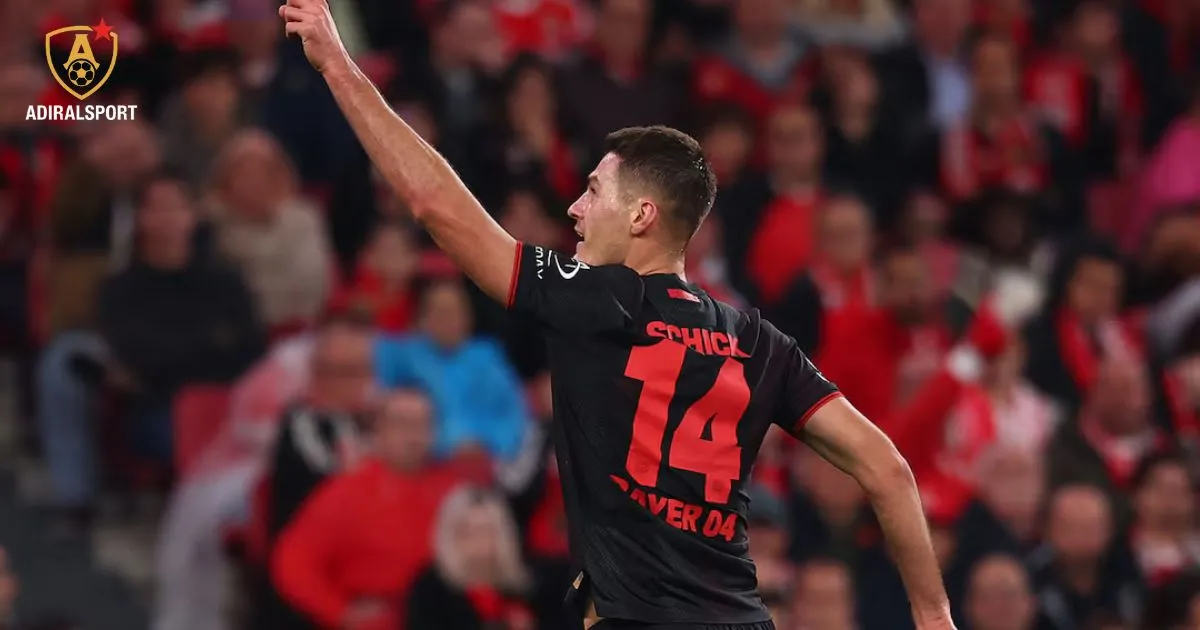
- Scorer: Patrik Schick (65′)
- Venue: Estádio da Luz, Lisbon
The Managerial Duel: Mourinho’s Aggression vs. Hjulmand’s Resilience
You might associate José Mourinho with “parking the bus,” but that’s a lazy narrative. Mourinho is a chameleon. He adapts to his players and his opponent. At home, against a team he perceived as weak and reeling from a 7-2 thrashing, he smelled blood. He set his Benfica side up to be the overwhelming aggressor. His plan was simple: press high, control the midfield, and unleash his creative talents.
Kasper Hjulmand’s task was monumental. How do you pick up a team that just conceded seven goals? You simplify. You build a fortress. You remove all complexity and focus on one thing: structural integrity. He knew his team couldn’t outplay Benfica, so he decided they wouldn’t play at all, in the traditional sense. They would defend, frustrate, and wait. This Benfica vs Leverkusen Tactical Analysis is defined by this clash of philosophies: Mourinho’s proactive aggression against Hjulmand’s reactive resilience.
Confirmed Lineups: The Tactical Blueprints
The starting XIs told you everything you needed to know about the managers’ intentions.
Mourinho rolled out his trusted 4-2-3-1. This formation gave him a solid double-pivot to control the center, full-backs (Aursnes and Dahl) with the license to bomb forward, and a fluid attacking quartet. Sudakov, the Ukrainian prodigy, was the brain, the #10 tasked with unlocking the door. Pavlidis led the line, with the explosive Lukébakio and the industrious Barreiro on the flanks. It was a lineup built to attack.
Hjulmand’s response? A 3-4-2-1 that, as you watched the game, rarely looked like a 3-4-2-1. It was a 5-4-1 in practice. The three center-backs (Quansah, Badé, Tapsoba) were the core of the fortress. But the key players were the wing-backs: Arthur on the right, and the returning Alejandro Grimaldo on the left. Their job was not to attack; it was to become full-backs, creating a flat, five-man defensive line that was incredibly difficult to penetrate. Poku and Echeverri were “false” attackers, tasked more with pressing and tracking back than creating.
| Benfica (4-2-3-1) | Bayer Leverkusen (3-4-2-1) |
| GK: Trubin | GK: Flekken |
| RB: Aursnes | RWB: Arthur |
| CB: Araújo | CB: Quansah |
| CB: Otamendi (c) | CB: Badé |
| LB: Dahl | LWB: Grimaldo |
| CM: Barrenechea | CM: Maza |
| CM: Ríos | CM: Aleix García |
| RW: Lukébakio | AM: Echeverri |
| CAM: Sudakov | AM: Poku |
| LW: Barreiro | ST: Kofane |
| Manager: J. Mourinho | Manager: K. Hjulmand |
The Statistical Anomaly: A Deeper Look / Benfica vs Leverkusen Tactical Analysis
Before we dive into the tactical shapes, you need to look at the numbers. Because, frankly, they’re absurd. If you just saw this stat sheet without the score, you would assume a 3-0 or 4-0 win for Benfica. This is the statistical evidence of the heist.
This table is the single most important part of our Benfica vs Leverkusen Tactical Analysis. It’s not just data; it’s a narrative.
| Statistic | Benfica | Bayer Leverkusen |
| Result | 0 | 1 |
| Possession % | 53% | 47% |
| Total Shots | 21 | 7 |
| Shots on Target | 6 | 3 |
| Woodwork Hit | 2 | 0 |
| Corners | 6 | 0 |
| Key Passes | 19 | 5 |
| Clearances | 10 | 33 |
| Dribble Success % | 30% | 47% |
| Fouls | 7 | 9 |
What do these numbers tell you?
- 21 Shots vs. 7: This is the core of Benfica’s frustration. They created three times as many opportunities. But look closer: 21 shots, only 6 on target. That’s an on-target rate of just 28.5%. It speaks to a team that was either rushed, unlucky, or taking low-percentage shots.
- 19 Key Passes vs. 5: This shows Benfica’s creative dominance. Sudakov, Lukébakio, and Ríos were constantly probing, finding space, and putting teammates in shooting positions. Leverkusen created almost nothing, registering just 5 key passes all game.
- 6 Corners vs. 0: This is perhaps the most shocking stat. Zero corners for Leverkusen. This tells you they never established any sustained offensive pressure. They never pinned Benfica back. They lived entirely on their side of the pitch.
- 10 Clearances vs. 33: This is where Leverkusen won the game. 33 clearances. That is an astonishing number. It’s the numerical representation of “parking the bus.” It was desperate, last-ditch, body-on-the-line defending. Every time a cross came in, a white shirt was there to boot it clear.
- 30% Dribble Success vs. 47%: This is a subtle but crucial part of this Benfica vs Leverkusen Tactical Analysis. Benfica’s players, in their desperation, tried to do too much. They ran into defenders, their dribbles (30% success) were ineffective. Leverkusen, on their rare ventures forward, were purposeful. They didn’t dribble often, but when they did, it was to get out of trouble or start a rare counter (47% success).
The stats don’t lie. They paint a brutal picture of a dominant but toothless attack versus a resilient and brutally efficient defense.
Benfica Tactical Breakdown: All Probing, No Poison / Benfica vs Leverkusen Tactical Analysis
So, let’s get into the why. Why did 21 shots fail? Why did 53% possession feel so useless? This section is a deep Benfica vs Leverkusen Tactical Analysis of the home side’s offensive strategy and, ultimately, its spectacular failure.
Mourinho’s 4-2-3-1 in Possession: A System Built to Create
You have to give Mourinho credit: his game plan was the right one. The 4-2-3-1 was perfectly designed to break down Leverkusen’s deep block.
The Engine Room: Ríos & Barrenechea
The foundation of Benfica’s dominance was their double pivot. Enzo Barrenechea and Pedro Ríos were magnificent for 65 minutes. They were the “Mourinho” part of the system. Their job was to win the ball back quickly and recycle it. They positioned themselves just ahead of the center-backs, allowing the full-backs, Aursnes and Dahl, to play like wingers. This 2-4-4 or 2-4-3-1 shape in possession was designed to create overloads in the wide areas. Ríos, in particular, was excellent, constantly switching play and breaking the first line of Leverkusen’s anemic press.
The Creative Hub: Sudakov’s Dilemma
Georgiy Sudakov was the man tasked with being the can opener. As the #10, he floated in the space between Leverkusen’s midfield (Maza, García) and their back three. You could see him getting frustrated. He was receiving the ball, turning, and looking for a killer pass, only to see a wall of five defenders. His 19 key passes (as a team) were a result of him and the wingers constantly trying to slip a ball through an impossibly small gap. He was creative, but he was trying to thread a needle that Hjulmand had barely left an opening for.
The Wide Threat: Lukébakio the Unlucky
Benfica’s primary attacking weapon was Dodi Lukébakio. The entire Benfica 4-2-3-1 analysis seemed to hinge on him. The plan was clear: isolate Lukébakio 1v1 against Alejandro Grimaldo or get him the ball in the half-space where he could cut inside on his preferred foot.
And it worked. Lukébakio was a one-man wrecking crew. He registered 8 shots by himself. He was the one who hit the woodwork. He was the one who forced Mark Flekken into two spectacular saves. He was dynamic, direct, and utterly relentless. But this brings us to the core problem of this Benfica vs Leverkusen Tactical Analysis: when your entire plan hinges on one player’s individual brilliance, and that player has an “almost” night, the entire system collapses. Barreiro on the other side was quiet, often drawn into a defensive battle with Arthur, leaving Lukébakio to carry the creative burden alone.
Why 21 Shots Failed: A Benfica vs Leverkusen Tactical Analysis of Inefficiency
This is the question Mourinho will be asking himself in the dark. How, how, how did 21 shots not find the net? It wasn’t just one thing. It was a perfect storm of four key factors.
- Factor 1: Flekken’s Goalkeeping MasterclassFirst, you have to give credit where it’s due. Mark Flekken, the Leverkusen keeper, was superb. He earned his 7.8 rating. Of Benfica’s 6 shots on target, at least three were high-quality chances. Flekken’s positioning was impeccable. He made a diving save from a Lukébakio curler in the first half and a massive point-blank stop on Pavlidis in the second. He commanded his box, claimed crosses, and, crucially, he did not spill a single rebound. He gave Benfica nothing cheap.
- Factor 2: Badé’s Defensive Wall (The 33 Clearances)This was the Man of the Match performance, without question. Loïc Badé, the central figure in Hjulmand’s back three, was a colossus. You can’t understand this Benfica vs Leverkusen Tactical Analysis without appreciating his performance. He was credited with an 8.2 rating, but that feels low. He seemed to have a magnetic attraction to the ball. He was the primary reason for those 33 clearances. He won his headers, he blocked shots, and his positioning was perfect. Alongside Quansah and Tapsoba, he formed an impenetrable barrier. His 97% pass accuracy also shows that when he did win the ball, he didn’t just panic-clear it; he found a teammate to relieve the pressure. He was the leader of the “soak.”
- Factor 3: Desperate Finishing and Low-Percentage ChancesNow, we must turn the mirror back on Benfica. As you watched the game, you could feel the anxiety creeping in. The 21 shots were not 21 golden opportunities.
- First 30 Mins: The shots were good. Lukébakio’s woodwork hit, a couple of testers for Flekken.
- 30-60 Mins: The shots became more hopeful. Curls from outside the box, half-volleys. The 19 key passes were leading to shots, but they were congested shots, with a defender always flying in to make a block.
- Post-Goal (65+ Mins): This was the collapse. Panic set in. The 21 shots tally is padded by frantic, 30-yard blasts from midfielders. Players were snatching at chances. Pavlidis, the striker, was a ghost, neutralized by the back three, and his few touches in the box were rushed. This is what a deep block does to you: it forces you to shoot from bad angles.
- Factor 4: Sheer, Unadulterated Bad LuckFinally, you cannot write this Benfica vs Leverkusen Tactical Analysis and ignore the woodwork. Twice. Lukébakio hit the post with a shot that had Flekken beaten. Later, a Sudakov effort took a deflection and looped onto the bar. Football is a game of inches. On another night, the first one goes in, Leverkusen are forced to open up, and Benfica win 3-0. But this wasn’t another night. This was this night. The margins are brutal, and they all went against Benfica.
Leverkusen Tactical Breakdown: Hjulmand’s “Soak and Strike” / Benfica vs Leverkusen Tactical Analysis
Now, let’s flip the script. How did Leverkusen do it? Hjulmand’s game plan was brave in its own ‘un-bravery.’ He conceded possession, he conceded territory, and he put all his faith in defensive structure. This was the ultimate “rope-a-dope.”
The 3-4-2-1 Defensive Shell (The 5-4-1 Reality)
The on-paper formation was a Leverkusen 3-4-2-1 analysis special. The reality was a deep, compact, and organized 5-4-1.
- The Back 5: As soon as Benfica crossed the halfway line, the wing-backs, Grimaldo and Arthur, dropped. They were not wing-backs; they were auxiliary full-backs. This five-man line meant Benfica’s wingers (Lukébakio, Barreiro) could never get in behind. The 3v2 advantage in the center (Badé, Quansah, Tapsoba vs. Pavlidis) was total.
- The Midfield Shield: In front of them, Maza and Aleix García played the most boring, unglamorous, and vital role of the night. Their job was to “clog the middle.” They sat 10 yards in front of the back five and just… stood there. They screened passes to Sudakov. They forced Benfica to play wide. By clogging the center, they made Benfica’s play predictable. It had to go to the wing.
- The “Attackers”: Kofane, Echeverri, and Poku were not attackers. They were the first line of defense. Their job was to listlessly press Otamendi and Araújo, not to win the ball, but to prevent them from striding forward and adding to the attack. They were, in effect, sacrificial lambs for the defensive structure.
This entire system was designed to do one thing: limit the quality of Benfica’s chances. It conceded quantity (21 shots) but refused to give up a single easy look. It was a masterclass in frustration, and a perfect example of how to execute a deep block.
Grimaldo’s Return: A Benfica vs Leverkusen Tactical Analysis of a Hero’s Homecoming
You have to dedicate a special section to Alejandro Grimaldo. The Estádio da Luz welcomed him back as a hero. He was their captain, their star, their creative force for so many years. And he returned as their executioner.
If you were expecting the marauding, overlapping, free-kick-scoring Grimaldo of old, you were disappointed. This was a new Grimaldo. A Hjulmand Grimaldo. A disciplined, defensive, pragmatic soldier.
- Defensive Workhorse: His individual stats are a testament to his professionalism. He led all players on the pitch with 5 tackles. Think about that. The man who was supposed to be a defensive liability against the explosive Lukébakio became a brick wall.
- The Mental Game: You can’t underestimate the psychology. He knew Lukébakio’s moves. He knew the stadium. He knew the pressure. He used it. He was booked, yes, but it was a “good” yellow, stopping a dangerous counter.
- Leadership: You could see him organizing. While Badé was the vocal leader of the center, Grimaldo was the one marshaling the left flank, ensuring Maza covered him, communicating constantly.
It was a heartbreaking performance for Benfica fans. He showed them exactly what they were missing: a world-class left-back. But he did it while wearing the “wrong” shirt. This individual Benfica vs Leverkusen Tactical Analysis shows his performance was the perfect microcosm of Leverkusen’s night: professional, disciplined, and brutally effective.
The Match-Defining Moments: A Tactical Timeline / Benfica vs Leverkusen Tactical Analysis
This Benfica vs Leverkusen Tactical Analysis is incomplete without looking at the key moments where the game’s narrative was written. The flow of the match was one-way traffic, punctuated by moments of sheer panic.
- [15′] – Woodwork #1: Lukébakio cuts inside. It’s a “classic” Lukébakio. He unleashes a curler. Flekken is a statue. The ball smacks the outside of the post and goes wide. A collective gasp. The first sign that it might be “one of those nights.”
- [41′] – 🟨 Yellow Card: Ibrahim Maza (Leverkusen). A cynical, tactical foul. He chops down Sudakov to stop a promising 4v3 counter. Hjulmand probably applauded. It was the “cost of doing business.”
- [HT] 0-0: The halftime whistle. Mourinho is animated. Benfica are frustrated, Leverkusen are delighted. The Benfica vs Leverkusen Tactical Analysis at halftime is clear: “dominance vs. discipline.” Benfica has 11 shots, but nothing to show for it.
The Second Half: How the Game Was Won and Lost
- [55′] – 🟨 Yellow Card: Edmond Tapsoba (Leverkusen). Another one. This time, Pavlidis is spun in behind, and Tapsoba has to haul him down. The pressure is building. You can feel a Benfica goal is coming.
- [57′] – 🔄 TACTICAL SUBSTITUTION (Leverkusen): This is it. This is the moment. This is the trueBenfica vs Leverkusen Tactical Analysis turning point. Hjulmand makes a double switch.
- Patrik Schick & Malik Tillman ON
- Christian Kofane & Claudio Echeverri OFF
- Hjulmand, seeing Benfica pushing everyone forward, takes off his “defensive” attackers and brings on a true poacher (Schick) and fresh, strong legs (Tillman). He’s not trying to win the game; he’s preparing to steal it on the one chance he might get.
- [65′] – ⚽ GOAL! Bayer Leverkusen (0-1). The sucker punch. The inevitable. We’ll break it down next.
- [69′] – 🔄 TACTICAL SUBSTITUTION (Benfica): Mourinho reacts. He’s furious. He throws on all his attacking subs: Schjelderup, Dedic, and Prestianni. It’s an “all-in” move. The 4-2-3-1 is now a 4-1-5.
- [78′] – 🟨 Yellow Card: Nicolás Otamendi (Benfica). Pure, unadulterated frustration. He clatters into Schick long after the ball is gone.
- [FT] 0-1: The final whistle. A stunned silence at the Estádio da Luz. Mourinho storms down the tunnel. Hjulmand and his staff celebrate like they’ve won the final. They have completed the perfect smash and grab.
Goal Breakdown: A Benfica vs Leverkusen Tactical Analysis of the Schick Goal
Let’s put the decisive moment under the microscope. How did Leverkusen, a team that had done nothing offensively, score?
- Key Point: The goal was a direct result of Benfica’s only major defensive lapse, born from their own relentless offensive pressure.
- The Buildup: It wasn’t even a counter-attack. It was a rare spell of 10-second possession for Leverkusen. The ball was worked wide to Malik Tillman, the fresh substitute.
- The Error: Benfica’s left-back, Samuel Dahl, who had been playing as a winger all night, was caught too high. The ball was played into the space he should have been occupying. Araújo, the center-back, was forced to come wide to cover, leaving a gap.
- The Cross & Finish: Tillman (Leverkusen’s other sub) whips in a hopeful, early cross. It’s not even a great ball. But it’s aimed at the one man on the pitch who exists for these moments: Patrik Schick. The “super-sub.”
- The Finish: Otamendi gets caught ball-watching for a split second. Schick, who had been invisible for 8 minutes, materializes between the two center-backs. He doesn’t even have to jump. It’s a simple, clinical, downward header. 0-1. It was his first touch in the Benfica box. This single moment is the crux of the entire Benfica vs Leverkusen Tactical Analysis: Leverkusen needed one chance; Benfica wasted 21.
Key Player Performances: The Benfica vs Leverkusen Tactical Analysis of Individuals
You can’t just analyze systems; you have to analyze the players who execute them. Here are the five key players who defined this match.
| Player | Team | Rating | Key Stat / Note |
| Loïc Badé | Leverkusen | 8.2 | (Man of the Match). A defensive titan. 97% pass success, 1 block, 33 team clearances. |
| Mark Flekken | Leverkusen | 7.8 | 5 crucial saves, commanded his area. |
| Alejandro Grimaldo | Leverkusen | 7.8 | 5 tackles (game-high) on his return to the Estádio da Luz. |
| Nicolás Otamendi | Benfica | 7.5 | A strong performance despite the loss; led his team in touches. |
| Dodi Lukébakio | Benfica | 7.1 | The “Heartbreak Hero.” Hit the woodwork, 8 shots, but no goal. |
- Loïc Badé (MOTM): What more can you say? He was the leader of the 33 clearances. He was the reason Pavlidis was invisible. In a game defined by defensive action, he was the king. Every time you thought Benfica was in, Badé’s foot or head appeared. A flawless 10/10 defensive performance.
- Mark Flekken: Without Flekken, Leverkusen lose this game. The 5 saves don’t tell the whole story. It was his composure. He never looked rattled. He slowed the game down, took his time on goal kicks, and killed Benfica’s momentum. A brilliant goalkeeping display.
- Alejandro Grimaldo: His 5 tackles were a statement. He was targeted by Mourinho. Lukébakio was sent to run at him. And he held his ground. It was an emotionally draining, physically demanding, and tactically perfect performance. A true professional.
- Nicolás Otamendi: You have to feel for the Benfica captain. He was 7.5/10. He did almost nothing wrong. He led the team in touches, he started every attack, and he was solid… until that one split second. His 7.5 rating reflects his excellent 64-minute performance, but he’ll be remembered for being half a-step-too-late on Schick.
- Dodi Lukébakio: The “Heartbreak Hero.” He was Benfica’s only real threat. 8 shots. The woodwork. He did everything Mourinho asked of him except score. His 7.1 rating reflects his impact, but also his inefficiency. This Benfica vs Leverkusen Tactical Analysis will see him as the primary victim of Leverkusen’s tactics.
Conclusion: The Final Word on This Benfica vs Leverkusen Tactical Analysis
- Summary: This was a tactical classic of two conflicting styles. José Mourinho’s Benfica played the role of the dominant aggressor, a role they played well, generating 21 shots and controlling the game. But they were met by a perfectly executed, pragmatic, and resilient defensive strategy from Kasper Hjulmand’s Bayer Leverkusen.
- Final Thought: The Benfica vs Leverkusen Tactical Analysis from this 2025/2026 Champions League match is a harsh, brutal reminder: possession doesn’t win games. Dominance is meaningless without a clinical edge. And 21 shots are worth less than one. Leverkusen, led by the returning Grimaldo, the colossal Badé, and the super-sub Patrik Schick, wrote the perfect script for a “smash and grab” victory. They soaked up every ounce of pressure and, with their one real punch, delivered a knockout blow.
This is a Benfica vs Leverkusen Tactical Analysis that will sting Mourinho and the Benfica faithful for a long, long time. They were the better team in every metric except the only one that counts.
A Call to Action / Benfica vs Leverkusen Tactical Analysis
You’ve seen the stats, you’ve read the analysis. But what did you see? Football is all about opinions.
- Did Mourinho get his tactics wrong?
- Was this a defensive masterclass from Hjulmand or just “anti-football”?
- Who was your Man of the Match?
Drop your own Benfica vs Leverkusen Tactical Analysis in the comments below! We want to hear your take on this unbelievable Champions League night.
FAQ: Your Benfica vs Leverkusen Tactical Analysis Questions Answered
Q: What was the final score of the Benfica vs Leverkusen 2025/2026 match?
A: Bayer Leverkusen pulled off a “smash and grab” victory, beating Benfica 1-0 at the Estádio da Luz on November 5, 2025, despite being heavily outshot.
Q: Who was Man of the Match in the Benfica vs Leverkusen game?
A: Leverkusen centre-back Loïc Badé was named Man of the Match. Our Benfica vs Leverkusen Tactical Analysis showed he was the key to their defensive stand, organizing the back line and contributing to a massive 33 team clearances.
Q: What formation did José Mourinho use in this Benfica vs Leverkusen Tactical Analysis?
A: José Mourinho used an aggressive 4-2-3-1 formation. The plan was to use a double pivot (Ríos and Barrenechea) to control the midfield, allowing his wingers and playmaker (Sudakov) to create chances for the lone striker, Pavlidis.
Q: Why did Benfica lose despite having 21 shots?
A: Our Benfica vs Leverkusen Tactical Analysis shows they lost due to a “perfect storm” of three factors: 1) Inefficient finishing and pure bad luck (hitting the woodwork twice), 2) A brilliant, organized defensive performance from Leverkusen (33 clearances) and a great goalkeeping display from Mark Flekken, and 3) A single clinical finish by Leverkusen’s substitute, Patrik Schick, from Benfica’s only major defensive lapse.
Q: What was the tactical plan for Leverkusen in this match?
A: Leverkusen’s tactical plan was to “soak and strike.” They defended deep in a 5-4-1 formation, conceding possession and territory. They were happy to let Benfica shoot from low-percentage areas. This entire Benfica vs Leverkusen Tactical Analysis highlights their plan was to frustrate Benfica and wait for one single chance, which came in the 65th minute for Patrik Schick.